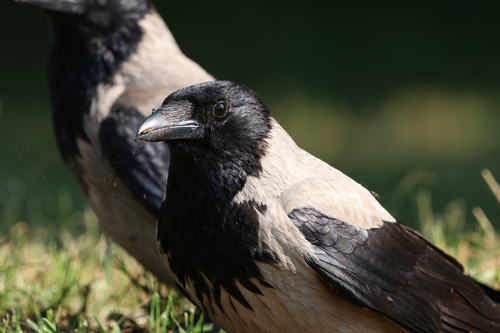
Rook vs Hooded Crow
Corvus frugilegus versus Corvus cornix
Play a quiz with Rook and Hooded Crow
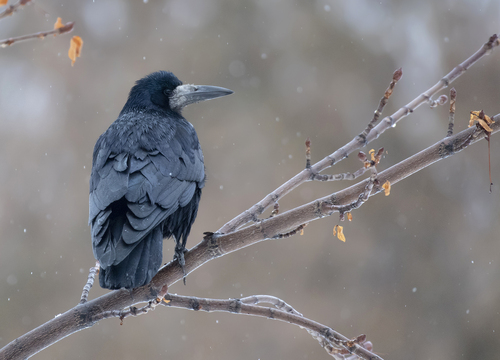
Rook
Hooded Crow
In short
The Rook and Hooded Crow can be differentiated primarily by plumage and structure. Rooks have a distinctive bare, pale face and a glossy black plumage, while Hooded Crows feature a contrasting gray body with black head, wings, and tail. Both species have similar sizes but differ in behavior and habitat preferences.
Identification tips
- Look for the Rook's bare, pale face and glossy black plumage. 2. Note the Hooded Crow's gray body with black head, wings, and tail. 3. Observe behavior: Rooks in large flocks, Hooded Crows more solitary. 4. Consider habitat: Rooks in fields, Hooded Crows in diverse environments.
Size
Both species are similar in size, typical of medium-sized corvids.
Plumage
Rooks have a glossy black plumage with a bare, pale face, especially around the base of the bill. Hooded Crows, in contrast, have a gray body with black head, wings, and tail, creating a striking two-tone appearance.
Behaviour
Rooks are often seen in large flocks, especially in open fields and agricultural areas, while Hooded Crows are more solitary or in small groups, often in urban areas or open countryside.
Habitat
Rooks prefer open fields and agricultural lands, often nesting in colonies. Hooded Crows are more adaptable, found in urban areas, coasts, and open countryside.
Voice
Both species have similar harsh, cawing calls, but specific vocal differences are subtle and may not be reliable for field identification.