Birdr

Rose-coloured Starling vs Mistle Thrush

Pastor roseus versus Turdus viscivorus

Play a quiz with Rose-coloured Starling and Mistle Thrush

Rose-coloured Starling (Pastor roseus) Rose-coloured Starling
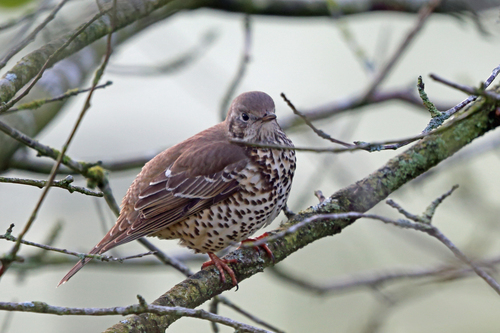
Mistle Thrush (Turdus viscivorus) Mistle Thrush

Media

Loading…

In short

The Rose-coloured Starling is easily distinguished from the Mistle Thrush by its striking pink and black plumage, while the Mistle Thrush has a more muted brown and white speckled appearance. The Starling's compact shape and short tail contrast with the Thrush's larger size and longer tail.

Identification tips

Look for the pink and black coloration of the Rose-coloured Starling, especially in breeding adults. Note the larger size and speckled underparts of the Mistle Thrush. Observe behavior: Starlings are often in flocks, while Thrushes are more solitary. Listen for the Mistle Thrush's distinct fluty song compared to the Starling's chattering calls.

Size

The Mistle Thrush is larger and more robust than the Rose-coloured Starling, with a longer tail and a bulkier body.

Plumage

The Rose-coloured Starling has a distinctive pink body with a glossy black head, wings, and tail. In contrast, the Mistle Thrush is predominantly brown with a white belly and dark spots.

Behaviour

Rose-coloured Starlings often form large flocks and are highly social, while Mistle Thrushes are more solitary or found in pairs, especially during the breeding season.

Habitat

Rose-coloured Starlings are typically found in open areas and agricultural lands, often near water. Mistle Thrushes prefer woodlands, parks, and gardens, often at higher elevations.

Voice

The Mistle Thrush has a loud, fluty song and harsh rattling calls, whereas the Rose-coloured Starling's vocalizations are less melodious, consisting of chattering and whistling notes.

Submit a better description

Use the same sections as the comparison. Your text is published immediately.

The Rose-coloured Starling is easily distinguished from the Mistle Thrush by its striking pink and black plumage, while the Mistle Thrush has a more muted brown and white speckled appearance. The Starling's compact shape and short tail contrast with the Thrush's larger size and longer tail.

Look for the pink and black coloration of the Rose-coloured Starling, especially in breeding adults. Note the larger size and speckled underparts of the Mistle Thrush. Observe behavior: Starlings are often in flocks, while Thrushes are more solitary. Listen for the Mistle Thrush's distinct fluty song compared to the Starling's chattering calls.

The Mistle Thrush is larger and more robust than the Rose-coloured Starling, with a longer tail and a bulkier body.

The Rose-coloured Starling has a distinctive pink body with a glossy black head, wings, and tail. In contrast, the Mistle Thrush is predominantly brown with a white belly and dark spots.

Rose-coloured Starlings often form large flocks and are highly social, while Mistle Thrushes are more solitary or found in pairs, especially during the breeding season.

Rose-coloured Starlings are typically found in open areas and agricultural lands, often near water. Mistle Thrushes prefer woodlands, parks, and gardens, often at higher elevations.

The Mistle Thrush has a loud, fluty song and harsh rattling calls, whereas the Rose-coloured Starling's vocalizations are less melodious, consisting of chattering and whistling notes.

Discard your changes?

You have unsaved edits. If you leave now, those changes will be lost.

Rose-coloured Starling · Mistle Thrush · My Tricky Birds