Rose-coloured Starling vs White's Thrush
Pastor roseus versus Zoothera aurea
Play a quiz with Rose-coloured Starling and White's Thrush
Rose-coloured Starling
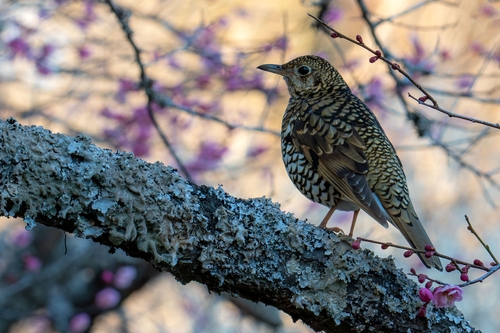
White's Thrush
In short
The Rose-coloured Starling and White's Thrush are distinct in both appearance and behavior. The starling is more social and often seen in flocks, while the thrush is solitary and secretive. Key identification features include the starling's pinkish body and glossy black head, contrasting with the thrush's heavily patterned brown and buff plumage.
Identification tips
- Plumage: Look for the starling's pink body and black head; the thrush has a scalloped brown and buff pattern.
- Behavior: Note flocking behavior for starlings versus the solitary nature of the thrush.
- Habitat: Consider the environment; starlings in open areas, thrushes in forests.
- Vocalization: Listen for the starling's chatter versus the thrush's fluty song.
Size
White's Thrush is generally larger and more robust than the Rose-coloured Starling.
Plumage
The Rose-coloured Starling has a striking pink body with a glossy black head, wings, and tail. In contrast, White's Thrush is heavily patterned with brown and buff, featuring intricate scalloping on its back and wings.
Behaviour
Rose-coloured Starlings are often seen in flocks and are highly social, especially during migration. White's Thrush is more solitary and secretive, often found alone or in pairs.
Habitat
Rose-coloured Starlings are typically found in open areas, often near human settlements during breeding. White's Thrush prefers dense, forested areas and is more elusive.
Voice
Rose-coloured Starlings have a variety of calls, often noisy and chattering. White's Thrush is known for its melodious and fluty song, though it can be difficult to hear due to its secretive nature.