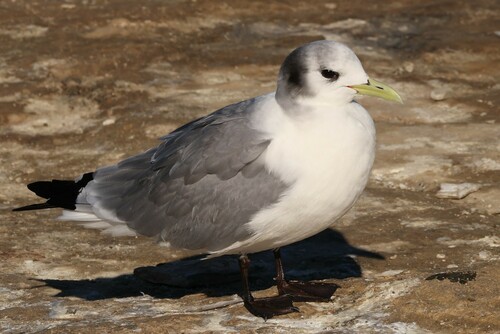
Ross's Gull vs Black-legged Kittiwake
Rhodostethia rosea versus Rissa tridactyla
Play a quiz with Ross's Gull and Black-legged Kittiwake
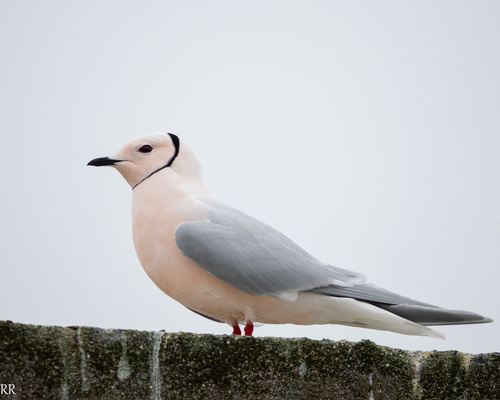
Ross's Gull
Black-legged Kittiwake
In short
Ross's Gull and Black-legged Kittiwake can be distinguished by their size, plumage, and behavior. Ross's Gull is smaller with a distinctive pinkish hue, while the Black-legged Kittiwake is larger with a more typical gull appearance. Both species inhabit different environments, aiding identification.
Identification tips
1. Size: Note the smaller size of Ross's Gull compared to the larger Black-legged Kittiwake. 2. Plumage: Look for the pinkish hue on Ross's Gull, absent in the Kittiwake. 3. Tail Shape: Ross's Gull has a wedge-shaped tail. 4. Habitat: Consider the environment; Ross's Gull is more Arctic, while Kittiwakes are found on sea cliffs. 5. Vocalization: Listen for the Kittiwake's distinctive call.
Size
Ross's Gull is smaller, about the size of a small tern, while the Black-legged Kittiwake is medium-sized, typical of larger gulls.
Plumage
Ross's Gull has a unique pinkish wash on its breast and a wedge-shaped tail. In contrast, the Black-legged Kittiwake has a more standard gull appearance with a white body, grey wings, and black wingtips, and lacks the pinkish hue.
Behaviour
Ross's Gull is often seen alone or in small groups, especially during migration, whereas Black-legged Kittiwakes are more social, often found in large colonies.
Habitat
Ross's Gull is typically found in Arctic regions and during migration near coastal areas, while Black-legged Kittiwakes breed on sea cliffs and are more widespread in temperate and subarctic regions.
Voice
Black-legged Kittiwake has a distinctive 'kittiwake' call, whereas Ross's Gull is generally quieter and less vocal, making vocalization a useful distinction.