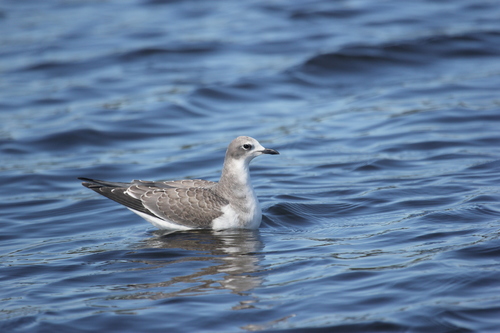
Ross's Gull vs Sabine's Gull
Rhodostethia rosea versus Xema sabini
Play a quiz with Ross's Gull and Sabine's Gull
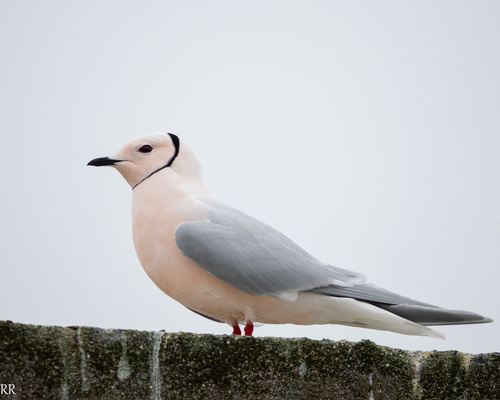
Ross's Gull
Sabine's Gull
In short
Ross's Gull and Sabine's Gull can be distinguished by their tail shape and bill color. Ross's Gull has a wedge-shaped tail and a uniformly dark bill, while Sabine's Gull features a notched tail and a distinctive black bill with a yellow tip.
Identification tips
- Tail Shape: Look for a wedge-shaped tail in Ross's Gull versus a notched tail in Sabine's Gull. 2. Bill Color: Ross's Gull has a uniformly dark bill, whereas Sabine's Gull has a black bill with a yellow tip. 3. Plumage: In breeding season, Sabine's Gull has a black hood; Ross's Gull does not. 4. Size: Sabine's Gull is slightly larger. 5. Behavior: Note Sabine's Gull's shorebird-like behaviors if observed.
Size
Both species are small gulls, but Sabine's Gull is slightly larger than Ross's Gull.
Plumage
Ross's Gull has a pale pinkish hue on its breast and a wedge-shaped tail, while Sabine's Gull is notable for its striking black, white, and gray plumage pattern and a notched tail. In breeding plumage, Sabine's Gull has a black hood, which Ross's Gull lacks.
Behaviour
Sabine's Gull exhibits behaviors more similar to shorebirds and terns, such as feeding on mudflats and distraction displays. Ross's Gull is less well-documented behaviorally but does not share these specific behaviors.
Habitat
Ross's Gull is typically found in Arctic regions and during migration might be seen along coastlines. Sabine's Gull breeds in the Arctic but is often observed at sea during migration.
Voice
Vocalizations are not well-documented for Ross's Gull, while Sabine's Gull has calls more similar to terns.