
Ruby-throated Hummingbird vs Broad-tailed Hummingbird
Archilochus colubris versus Selasphorus platycercus
Play a quiz with Ruby-throated Hummingbird and Broad-tailed Hummingbird
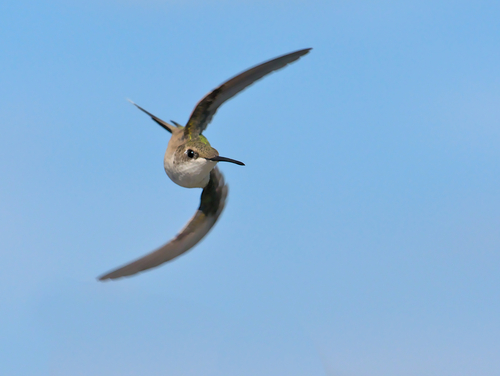
Ruby-throated Hummingbird
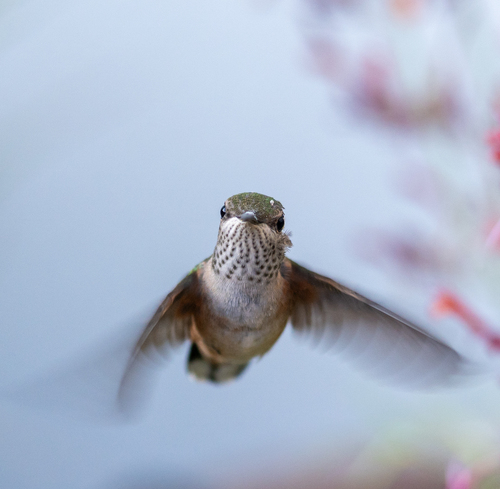
Broad-tailed Hummingbird
In short
The Ruby-throated Hummingbird and the Broad-tailed Hummingbird can be distinguished by their throat coloration and wing sounds. The Ruby-throated has a vibrant red throat in males, while the Broad-tailed produces a distinctive wing trill during flight. Both species are small, but their habitats and behaviors offer additional clues.
Identification tips
- Look for the red throat in males: Ruby-throated is bright red, Broad-tailed is rosy-red. 2. Listen for the wing trill in Broad-tailed Hummingbirds. 3. Consider the habitat: eastern regions suggest Ruby-throated, while mountainous western areas suggest Broad-tailed. 4. Observe behavior: Broad-tailed's aerial displays are distinctive.
Size
Both species are similar in size, typical of small hummingbirds, making size an unreliable distinguishing feature.
Plumage
Male Ruby-throated Hummingbirds have a brilliant red throat, whereas male Broad-tailed Hummingbirds have a rosy-red throat. Females and immatures of both species are more similar, with greenish backs and whitish underparts.
Behaviour
Broad-tailed Hummingbirds are known for their aerial displays and loud wing trill, which is not present in Ruby-throated Hummingbirds. Both species feed on nectar and small insects.
Habitat
Ruby-throated Hummingbirds are typically found in eastern North America, favoring gardens and woodlands. Broad-tailed Hummingbirds are more common in the mountainous regions of the western United States, often near forests.
Voice
The Broad-tailed Hummingbird's wing trill is a key auditory cue, while Ruby-throated Hummingbirds do not produce this sound.
Ruby-throated Hummingbird · Broad-tailed Hummingbird · My Tricky Birds