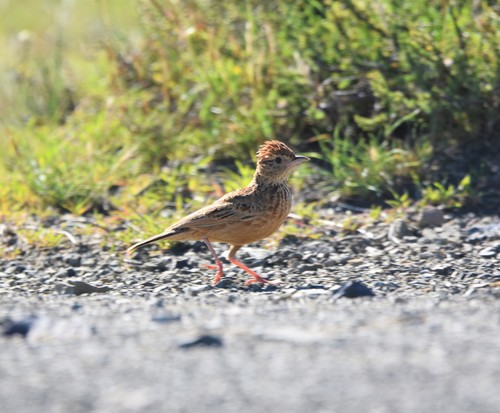
Rudd's Lark vs Eastern Clapper Lark
Heteromirafra ruddi versus Corypha fasciolata
Play a quiz with Rudd's Lark and Eastern Clapper Lark
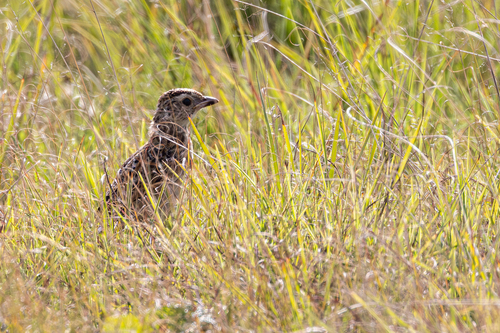
Rudd's Lark
Eastern Clapper Lark
In short
Rudd's Lark and Eastern Clapper Lark are both small larks found in southern Africa, but they differ in structure and habitat preferences. Rudd's Lark is more robust with a shorter tail and prefers grasslands, while the Eastern Clapper Lark has a longer tail and favors open, sandy areas. Their vocalizations also differ, with the Eastern Clapper Lark known for its distinctive clapping sound during display flights.
Identification tips
1. Structure: Look for the tail length; Eastern Clapper Lark has a longer tail. 2. Habitat: Note the environment; Rudd's Lark is in grasslands, Eastern Clapper Lark in sandy areas. 3. Behavior: Watch for display flights with clapping sounds in Eastern Clapper Lark. 4. Plumage: Check for more streaking on Rudd's Lark's breast and back.
Size
Rudd's Lark is slightly more robust with a shorter tail compared to the Eastern Clapper Lark, which has a longer tail.
Plumage
Both species have similar brownish plumage, but Rudd's Lark tends to have a more streaked appearance on the breast and back.
Behaviour
Eastern Clapper Lark is known for its display flights that include a clapping sound, while Rudd's Lark is less conspicuous in its behavior.
Habitat
Rudd's Lark is typically found in grasslands, whereas Eastern Clapper Lark prefers open, sandy areas.
Voice
Eastern Clapper Lark produces a distinctive clapping sound during its display flights, which is not present in Rudd's Lark's vocalizations.