Birdr

Ruddy-breasted Crake vs Baillon's Crake

Zapornia fusca versus Zapornia pusilla

Play a quiz with Ruddy-breasted Crake and Baillon's Crake
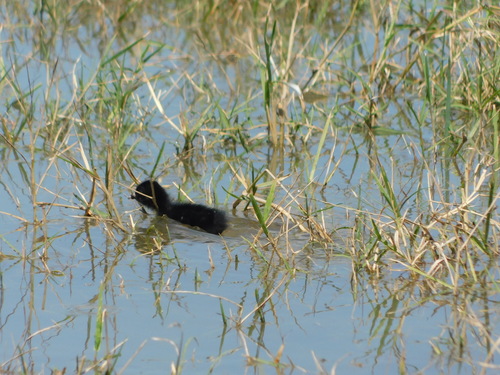
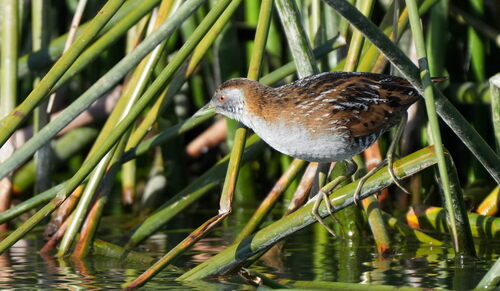
Ruddy-breasted Crake (Zapornia fusca) Ruddy-breasted Crake
Baillon's Crake (Zapornia pusilla) Baillon's Crake

Media

Loading…

In short

The Ruddy-breasted Crake and Baillon's Crake are small, secretive rails often found in similar wetland habitats. Key differences include the Ruddy-breasted Crake's more robust build and rufous underparts compared to the Baillon's Crake's smaller size and more subdued plumage. Vocalizations can also aid in identification, as they differ between the species.

Identification tips

1. Size and Structure: Look for the Ruddy-breasted Crake's larger and more robust build. 2. Plumage: Note the rufous underparts of the Ruddy-breasted Crake compared to the paler Baillon's Crake. 3. Vocalizations: Listen for distinct calls, as these can be a reliable differentiator. 4. Habitat: While both species share similar habitats, local variations may help in identification.

Size

Ruddy-breasted Crake is slightly larger and more robust than Baillon's Crake.

Plumage

Ruddy-breasted Crake has distinctive rufous underparts, while Baillon's Crake has paler, more subdued plumage with a less pronounced rufous tone.

Behaviour

Both species are secretive and often skulk in dense vegetation, making them challenging to observe.

Habitat

Both species inhabit similar wetland environments, such as marshes and reed beds, but specific preferences may vary locally.

Voice

The vocalizations differ, with each species having distinct calls that can be used for identification.

Submit a better description

Use the same sections as the comparison. Your text is published immediately.

The Ruddy-breasted Crake and Baillon's Crake are small, secretive rails often found in similar wetland habitats. Key differences include the Ruddy-breasted Crake's more robust build and rufous underparts compared to the Baillon's Crake's smaller size and more subdued plumage. Vocalizations can also aid in identification, as they differ between the species.

1. Size and Structure: Look for the Ruddy-breasted Crake's larger and more robust build. 2. Plumage: Note the rufous underparts of the Ruddy-breasted Crake compared to the paler Baillon's Crake. 3. Vocalizations: Listen for distinct calls, as these can be a reliable differentiator. 4. Habitat: While both species share similar habitats, local variations may help in identification.

Ruddy-breasted Crake is slightly larger and more robust than Baillon's Crake.

Ruddy-breasted Crake has distinctive rufous underparts, while Baillon's Crake has paler, more subdued plumage with a less pronounced rufous tone.

Both species are secretive and often skulk in dense vegetation, making them challenging to observe.

Both species inhabit similar wetland environments, such as marshes and reed beds, but specific preferences may vary locally.

The vocalizations differ, with each species having distinct calls that can be used for identification.

Discard your changes?

You have unsaved edits. If you leave now, those changes will be lost.

Ruddy-breasted Crake · Baillon's Crake · My Tricky Birds