Birdr

Ruddy Ground Dove vs Brown-backed Solitaire

Columbina talpacoti versus Myadestes occidentalis

Play a quiz with Ruddy Ground Dove and Brown-backed Solitaire
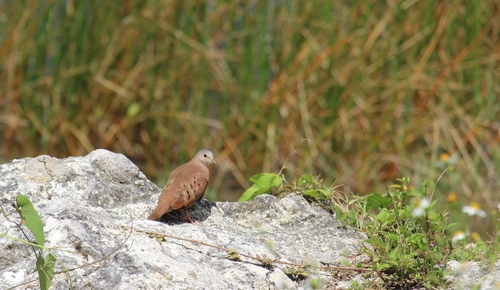
Ruddy Ground Dove (Columbina talpacoti) Ruddy Ground Dove
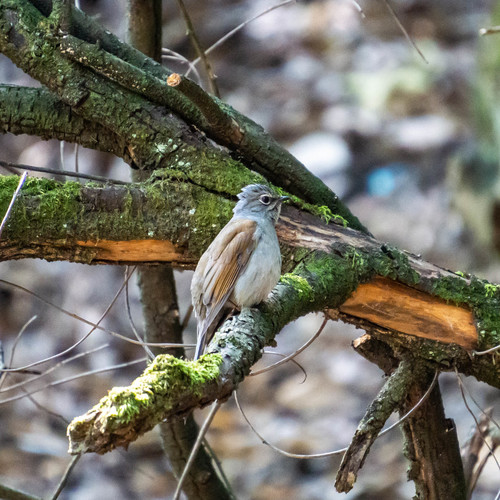
Brown-backed Solitaire (Myadestes occidentalis) Brown-backed Solitaire

Media

Loading…

In short

The Ruddy Ground Dove is a small, terrestrial dove with a rufous-brown body, while the Brown-backed Solitaire is a medium-sized songbird with a distinctive black malar streak and a broken white eye-ring. These species differ significantly in habitat preference and behavior, making them unlikely to be confused in the field.

Identification tips

  1. Look for the rufous-brown plumage of the Ruddy Ground Dove. 2. Note the black malar streak and broken white eye-ring of the Brown-backed Solitaire. 3. Observe the habitat: open and ground-based for Ruddy Ground Dove, dense forest and arboreal for Brown-backed Solitaire. 4. Listen for the distinctive vocalizations of the Brown-backed Solitaire.

Size

The Ruddy Ground Dove is smaller and more compact compared to the larger, more slender Brown-backed Solitaire.

Plumage

Ruddy Ground Doves have a uniform rufous-brown plumage, while Brown-backed Solitaires feature a brown back, dark cheeks, and a broken white eye-ring, with a black malar streak.

Behaviour

Ruddy Ground Doves are often seen foraging on the ground for seeds, whereas Brown-backed Solitaires are more arboreal, feeding on fruit at low to mid levels in the forest.

Habitat

Ruddy Ground Doves inhabit open areas like riparian zones and suburban yards, while Brown-backed Solitaires prefer dense, humid to semi-arid evergreen forests, primarily in highland regions.

Voice

Brown-backed Solitaires are known for their ventriloquial vocalizations, which are a key identification feature, while Ruddy Ground Doves are not particularly noted for distinctive calls.

Submit a better description

Use the same sections as the comparison. Your text is published immediately.

The Ruddy Ground Dove is a small, terrestrial dove with a rufous-brown body, while the Brown-backed Solitaire is a medium-sized songbird with a distinctive black malar streak and a broken white eye-ring. These species differ significantly in habitat preference and behavior, making them unlikely to be confused in the field.

  1. Look for the rufous-brown plumage of the Ruddy Ground Dove. 2. Note the black malar streak and broken white eye-ring of the Brown-backed Solitaire. 3. Observe the habitat: open and ground-based for Ruddy Ground Dove, dense forest and arboreal for Brown-backed Solitaire. 4. Listen for the distinctive vocalizations of the Brown-backed Solitaire.

The Ruddy Ground Dove is smaller and more compact compared to the larger, more slender Brown-backed Solitaire.

Ruddy Ground Doves have a uniform rufous-brown plumage, while Brown-backed Solitaires feature a brown back, dark cheeks, and a broken white eye-ring, with a black malar streak.

Ruddy Ground Doves are often seen foraging on the ground for seeds, whereas Brown-backed Solitaires are more arboreal, feeding on fruit at low to mid levels in the forest.

Ruddy Ground Doves inhabit open areas like riparian zones and suburban yards, while Brown-backed Solitaires prefer dense, humid to semi-arid evergreen forests, primarily in highland regions.

Brown-backed Solitaires are known for their ventriloquial vocalizations, which are a key identification feature, while Ruddy Ground Doves are not particularly noted for distinctive calls.

Discard your changes?

You have unsaved edits. If you leave now, those changes will be lost.

Ruddy Ground Dove · Brown-backed Solitaire · My Tricky Birds