Birdr

Ruddy Shelduck vs Baikal Teal

Tadorna ferruginea versus Sibirionetta formosa

Play a quiz with Ruddy Shelduck and Baikal Teal
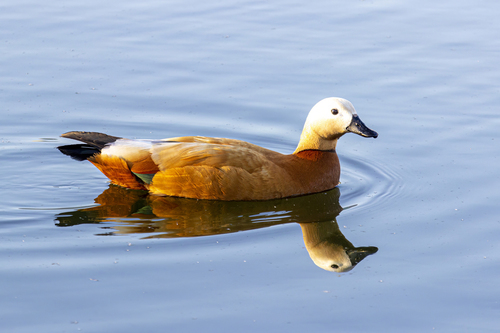
Ruddy Shelduck (Tadorna ferruginea) Ruddy Shelduck
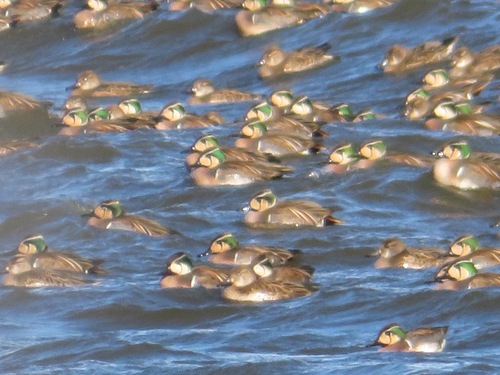
Baikal Teal (Sibirionetta formosa) Baikal Teal

Media

Loading…

In short

The Ruddy Shelduck and Baikal Teal are both waterfowl but differ significantly in appearance and behavior. The Ruddy Shelduck is larger with a striking orange-brown body and pale head, while the Baikal Teal is smaller, with males displaying a distinctive, colorful face pattern. Both species occupy different habitats and exhibit unique behaviors.

Identification tips

  1. Size and Shape: Look for the larger size and robust build of the Ruddy Shelduck. 2. Plumage: Note the orange-brown body and pale head of the Ruddy Shelduck versus the colorful face of the male Baikal Teal. 3. Behavior: Observe flocking behavior; Baikal Teals form large, dense flocks, unlike the more solitary or small group behavior of Ruddy Shelducks. 4. Habitat: Consider the habitat; Ruddy Shelducks are more versatile, while Baikal Teals are often in rice fields and ponds.

Size

The Ruddy Shelduck is larger and more robust compared to the smaller, more compact Baikal Teal.

Plumage

The Ruddy Shelduck has a uniform orange-brown body with a pale head and contrasting black and white wings. In contrast, the male Baikal Teal features a variegated face pattern with green, yellow, and black, while females are more subdued but still intricately patterned.

Behaviour

Ruddy Shelducks are often seen in pairs or small groups, while Baikal Teals form large, dense flocks, especially during the nonbreeding season.

Habitat

Ruddy Shelducks are highly adaptable, found in a variety of wetland habitats from lowlands to high altitudes. Baikal Teals prefer rice fields and freshwater ponds, particularly in South Korea during winter.

Submit a better description

Use the same sections as the comparison. Your text is published immediately.

The Ruddy Shelduck and Baikal Teal are both waterfowl but differ significantly in appearance and behavior. The Ruddy Shelduck is larger with a striking orange-brown body and pale head, while the Baikal Teal is smaller, with males displaying a distinctive, colorful face pattern. Both species occupy different habitats and exhibit unique behaviors.

  1. Size and Shape: Look for the larger size and robust build of the Ruddy Shelduck. 2. Plumage: Note the orange-brown body and pale head of the Ruddy Shelduck versus the colorful face of the male Baikal Teal. 3. Behavior: Observe flocking behavior; Baikal Teals form large, dense flocks, unlike the more solitary or small group behavior of Ruddy Shelducks. 4. Habitat: Consider the habitat; Ruddy Shelducks are more versatile, while Baikal Teals are often in rice fields and ponds.

The Ruddy Shelduck is larger and more robust compared to the smaller, more compact Baikal Teal.

The Ruddy Shelduck has a uniform orange-brown body with a pale head and contrasting black and white wings. In contrast, the male Baikal Teal features a variegated face pattern with green, yellow, and black, while females are more subdued but still intricately patterned.

Ruddy Shelducks are often seen in pairs or small groups, while Baikal Teals form large, dense flocks, especially during the nonbreeding season.

Ruddy Shelducks are highly adaptable, found in a variety of wetland habitats from lowlands to high altitudes. Baikal Teals prefer rice fields and freshwater ponds, particularly in South Korea during winter.

Discard your changes?

You have unsaved edits. If you leave now, those changes will be lost.

Ruddy Shelduck · Baikal Teal · My Tricky Birds