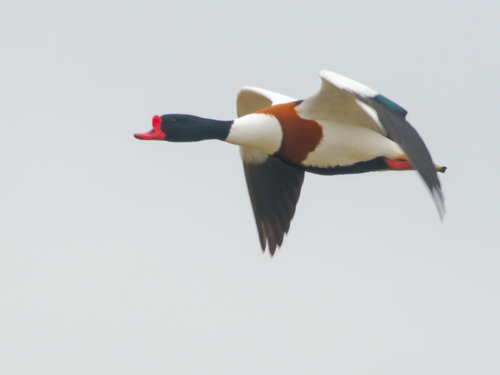
Ruddy Shelduck vs Common Shelduck
Tadorna ferruginea versus Tadorna tadorna
Play a quiz with Ruddy Shelduck and Common Shelduck
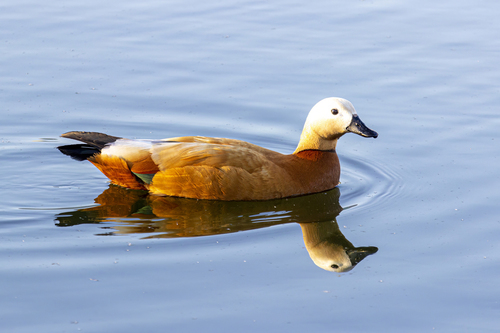
Ruddy Shelduck
Common Shelduck
In short
The Ruddy Shelduck and Common Shelduck are both large, colorful waterfowl, but they can be distinguished by their plumage and habitat preferences. The Ruddy Shelduck has a warm orange-brown body with a pale head, while the Common Shelduck features a striking black, white, and chestnut pattern. Both species occupy similar wetland habitats, but the Ruddy Shelduck is more adaptable to a variety of landscapes.
Identification tips
Look for the warm orange-brown body and pale head of the Ruddy Shelduck versus the black, white, and chestnut pattern of the Common Shelduck. Consider habitat: Ruddy Shelducks are more likely found in diverse inland habitats, whereas Common Shelducks favor coastal areas. In flight, note the black and white wing pattern of the Ruddy Shelduck compared to the bold chestnut and white pattern of the Common Shelduck.
Size
Both species are similar in size, with the Common Shelduck being slightly larger and bulkier.
Plumage
The Ruddy Shelduck has a warm orange-brown body with a creamy white head and rump, and black flight feathers contrasting with white wing coverts. The Common Shelduck displays a bold pattern with a white body, black back, and chestnut band across the chest, along with a distinctive greenish-black head and neck.
Behaviour
Both species are often seen in pairs or small groups, but the Ruddy Shelduck is known for its adaptability to various nesting sites, including tree holes and buildings.
Habitat
The Ruddy Shelduck is highly adaptable, found in diverse habitats from coastal lowlands to high mountains, while the Common Shelduck prefers coastal and estuarine environments.
Voice
Vocalizations are not a primary distinguishing feature between these species, as both have similar calls.