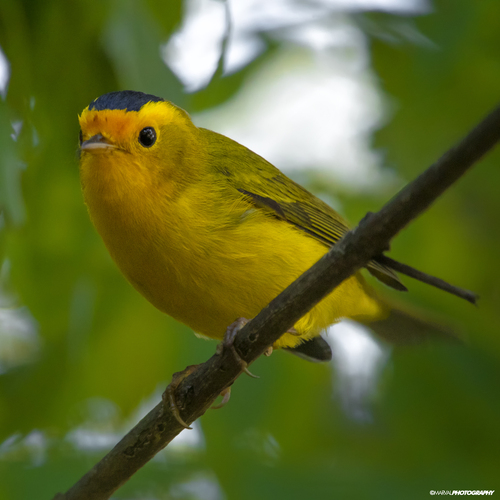
Ruddy-tailed Flycatcher vs Wilson's Warbler
Terenotriccus erythrurus versus Cardellina pusilla
Play a quiz with Ruddy-tailed Flycatcher and Wilson's Warbler
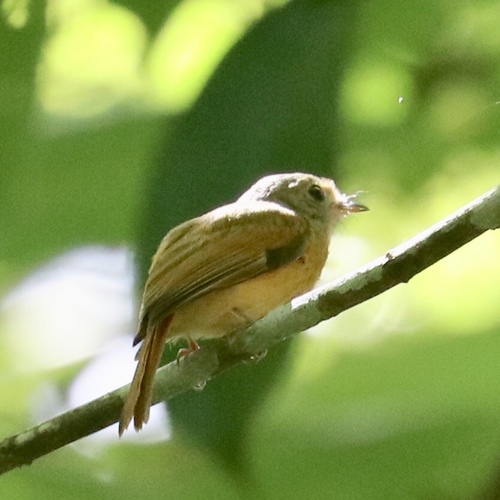
Ruddy-tailed Flycatcher
Wilson's Warbler
In short
The Ruddy-tailed Flycatcher and Wilson's Warbler can be distinguished primarily by their plumage and behavior. The flycatcher has a distinctive rufous tail and is often found in forested habitats, while the warbler is known for its black cap and bright yellow body, frequently seen in shrubby, wet areas.
Identification tips
1. Look for the rufous tail in Ruddy-tailed Flycatcher versus the black cap and bright yellow body of Wilson's Warbler. 2. Note the habitat: forested areas for the flycatcher, shrubby, wet areas for the warbler. 3. Observe behavior: the flycatcher is more stationary, while the warbler is active and tail-waving. 4. Listen for the warbler's chattering song.
Size
Both species are small, but Wilson's Warbler is slightly smaller and more delicate in appearance.
Plumage
Ruddy-tailed Flycatcher has a rufous tail and generally duller, more uniform coloration. Wilson's Warbler features a bright yellow body with a contrasting black cap, especially in males.
Behaviour
Ruddy-tailed Flycatcher typically perches quietly in the forest understory, while Wilson's Warbler is active, often seen flitting through shrubs and waving its tail.
Habitat
Ruddy-tailed Flycatcher prefers dense, humid forests, while Wilson's Warbler is found in riparian habitats and wet meadows with deciduous shrubs.
Voice
Wilson's Warbler has a short, chattering song, which can help distinguish it from the generally quieter Ruddy-tailed Flycatcher.
Ruddy-tailed Flycatcher · Wilson's Warbler · My Tricky Birds