Birdr

Rufescent Tiger-Heron vs Pinnated Bittern

Tigrisoma lineatum versus Botaurus pinnatus

Play a quiz with Rufescent Tiger-Heron and Pinnated Bittern
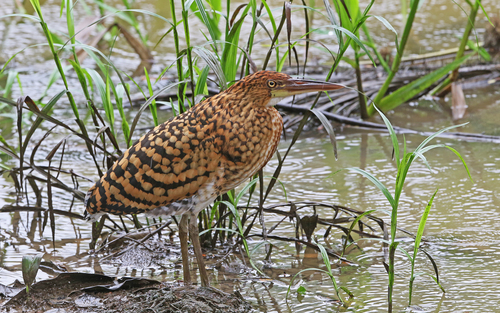
Rufescent Tiger-Heron (Tigrisoma lineatum) Rufescent Tiger-Heron
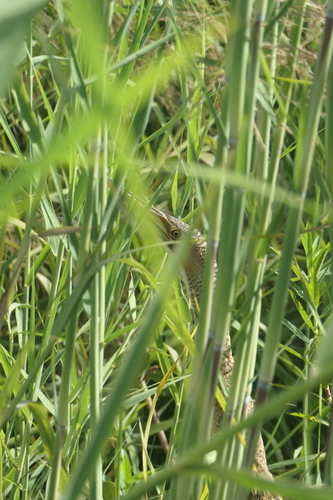
Pinnated Bittern (Botaurus pinnatus) Pinnated Bittern

Media

Loading…

In short

The Rufescent Tiger-Heron and Pinnated Bittern can be distinguished primarily by their habitat preferences and plumage patterns. The Rufescent Tiger-Heron is often found along slower-moving waters and has a more rufous coloration, while the Pinnated Bittern prefers marshy areas and exhibits a more streaked appearance.

Identification tips

1. Habitat: Look for the Rufescent Tiger-Heron along slower-moving waters, while the Pinnated Bittern is more likely in marshes. 2. Plumage: Note the rufous coloration of the Rufescent Tiger-Heron compared to the streaked appearance of the Pinnated Bittern. 3. Behavior: Observe the bird's behavior; the Rufescent Tiger-Heron may be more visible at the water's edge, whereas the Pinnated Bittern is often hidden in marsh vegetation.

Size

Both species are similar in size, typical of herons and bitterns, with no significant differences in structure that are easily observable in the field.

Plumage

The Rufescent Tiger-Heron has a rufous or chestnut coloration, especially noticeable on the neck and upperparts. In contrast, the Pinnated Bittern has a more streaked and cryptic plumage, with a mix of browns and yellows that help it blend into marsh vegetation.

Behaviour

Both species are generally solitary and secretive, but the Rufescent Tiger-Heron may be more often seen standing still at the water's edge, while the Pinnated Bittern is more likely to be found skulking in dense marsh vegetation.

Habitat

The Rufescent Tiger-Heron is typically found along slower-moving streams and riverbanks, often at lower elevations. The Pinnated Bittern prefers marshes and wetlands, where it can blend into the reeds and grasses.

Voice

Vocalizations are not a primary distinguishing feature in the field, as both species are generally quiet and secretive.

Submit a better description

Use the same sections as the comparison. Your text is published immediately.

The Rufescent Tiger-Heron and Pinnated Bittern can be distinguished primarily by their habitat preferences and plumage patterns. The Rufescent Tiger-Heron is often found along slower-moving waters and has a more rufous coloration, while the Pinnated Bittern prefers marshy areas and exhibits a more streaked appearance.

1. Habitat: Look for the Rufescent Tiger-Heron along slower-moving waters, while the Pinnated Bittern is more likely in marshes. 2. Plumage: Note the rufous coloration of the Rufescent Tiger-Heron compared to the streaked appearance of the Pinnated Bittern. 3. Behavior: Observe the bird's behavior; the Rufescent Tiger-Heron may be more visible at the water's edge, whereas the Pinnated Bittern is often hidden in marsh vegetation.

Both species are similar in size, typical of herons and bitterns, with no significant differences in structure that are easily observable in the field.

The Rufescent Tiger-Heron has a rufous or chestnut coloration, especially noticeable on the neck and upperparts. In contrast, the Pinnated Bittern has a more streaked and cryptic plumage, with a mix of browns and yellows that help it blend into marsh vegetation.

Both species are generally solitary and secretive, but the Rufescent Tiger-Heron may be more often seen standing still at the water's edge, while the Pinnated Bittern is more likely to be found skulking in dense marsh vegetation.

The Rufescent Tiger-Heron is typically found along slower-moving streams and riverbanks, often at lower elevations. The Pinnated Bittern prefers marshes and wetlands, where it can blend into the reeds and grasses.

Vocalizations are not a primary distinguishing feature in the field, as both species are generally quiet and secretive.

Discard your changes?

You have unsaved edits. If you leave now, those changes will be lost.

Rufescent Tiger-Heron · Pinnated Bittern · My Tricky Birds