Birdr

Ruff vs Curlew Sandpiper

Calidris pugnax versus Calidris ferruginea

Play a quiz with Ruff and Curlew Sandpiper
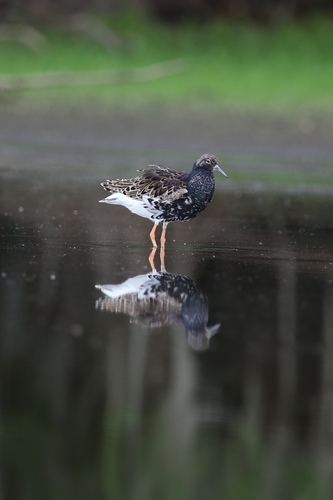
Ruff (Calidris pugnax) Ruff
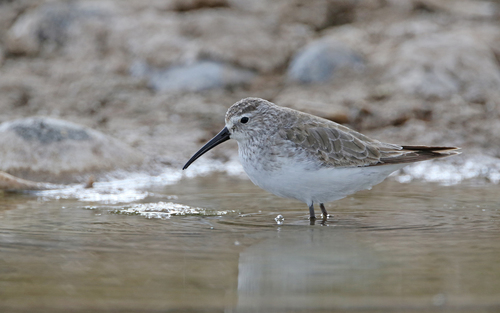
Curlew Sandpiper (Calidris ferruginea) Curlew Sandpiper

Media

Loading…

In short

Ruff and Curlew Sandpiper are both medium-sized waders, but they can be distinguished by their structure and plumage. The Ruff has a bulkier build with a shorter bill, while the Curlew Sandpiper is more slender with a longer, decurved bill. In breeding plumage, the Ruff's males are highly variable with ornate ruffs, whereas the Curlew Sandpiper is more uniform with a rufous wash.

Identification tips

  1. Bill shape: Ruff has a shorter, straighter bill; Curlew Sandpiper has a longer, decurved bill. 2. Breeding plumage: Male Ruffs have ornate ruffs and tufts; Curlew Sandpipers have a rufous wash. 3. Size and structure: Ruff is bulkier; Curlew Sandpiper is more slender. 4. Habitat preference: Ruffs in varied wetlands; Curlew Sandpipers in coastal areas. 5. Behavior: Look for lekking behavior in Ruffs during breeding season.

Size

Ruff is generally larger and bulkier than the Curlew Sandpiper.

Plumage

In breeding plumage, male Ruffs are highly variable with ornate ruffs and tufts, while Curlew Sandpipers have a more uniform rufous wash on the underparts. In non-breeding plumage, both species are more subdued, but the Ruff often appears mottled and the Curlew Sandpiper remains more uniform.

Behaviour

Ruffs often display in leks during breeding season, which is not observed in Curlew Sandpipers. Both species forage by probing in mud, but the Ruff may be seen in more varied social displays.

Habitat

Both species frequent wetlands, but Ruffs are more likely to be found in a wider range of wetland habitats, including marshes and flooded fields. Curlew Sandpipers prefer coastal mudflats and estuaries.

Voice

Vocalizations are not a primary distinguishing feature, but Ruffs have a low, grunting call, while Curlew Sandpipers have a more melodic, trilling call.

Submit a better description

Use the same sections as the comparison. Your text is published immediately.

Ruff and Curlew Sandpiper are both medium-sized waders, but they can be distinguished by their structure and plumage. The Ruff has a bulkier build with a shorter bill, while the Curlew Sandpiper is more slender with a longer, decurved bill. In breeding plumage, the Ruff's males are highly variable with ornate ruffs, whereas the Curlew Sandpiper is more uniform with a rufous wash.

  1. Bill shape: Ruff has a shorter, straighter bill; Curlew Sandpiper has a longer, decurved bill. 2. Breeding plumage: Male Ruffs have ornate ruffs and tufts; Curlew Sandpipers have a rufous wash. 3. Size and structure: Ruff is bulkier; Curlew Sandpiper is more slender. 4. Habitat preference: Ruffs in varied wetlands; Curlew Sandpipers in coastal areas. 5. Behavior: Look for lekking behavior in Ruffs during breeding season.

Ruff is generally larger and bulkier than the Curlew Sandpiper.

In breeding plumage, male Ruffs are highly variable with ornate ruffs and tufts, while Curlew Sandpipers have a more uniform rufous wash on the underparts. In non-breeding plumage, both species are more subdued, but the Ruff often appears mottled and the Curlew Sandpiper remains more uniform.

Ruffs often display in leks during breeding season, which is not observed in Curlew Sandpipers. Both species forage by probing in mud, but the Ruff may be seen in more varied social displays.

Both species frequent wetlands, but Ruffs are more likely to be found in a wider range of wetland habitats, including marshes and flooded fields. Curlew Sandpipers prefer coastal mudflats and estuaries.

Vocalizations are not a primary distinguishing feature, but Ruffs have a low, grunting call, while Curlew Sandpipers have a more melodic, trilling call.

Discard your changes?

You have unsaved edits. If you leave now, those changes will be lost.

Ruff · Curlew Sandpiper · My Tricky Birds