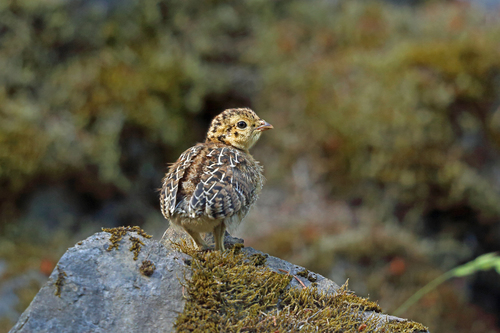
Ruffed Grouse vs Sooty Grouse
Bonasa umbellus versus Dendragapus fuliginosus
Play a quiz with Ruffed Grouse and Sooty Grouse
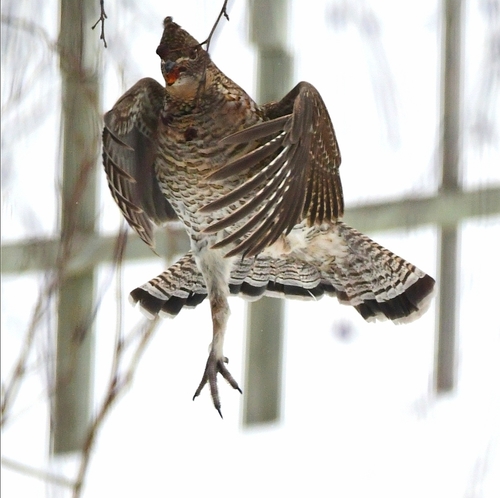
Ruffed Grouse
Sooty Grouse
In short
Ruffed Grouse and Sooty Grouse can be distinguished by habitat and plumage differences. Ruffed Grouse prefer deciduous forests and have a distinctive dark tail band and neck ruff, while Sooty Grouse are found in coniferous forests and have a more uniform dark plumage. Vocalizations also differ, with Ruffed Grouse known for their drumming and Sooty Grouse for their hooting calls.
Identification tips
- Habitat: Check the surrounding forest type; deciduous suggests Ruffed Grouse, coniferous suggests Sooty Grouse.
- Tail Band: Look for the dark band near the tail tip in Ruffed Grouse.
- Neck Ruff: Ruffed Grouse have a neck ruff that can be erected, which Sooty Grouse lack.
- Vocalization: Listen for drumming (Ruffed) vs. hooting (Sooty).
- Plumage: Note the mottled vs. uniform dark plumage.
Size
Both species are similar in size, typical of medium-sized grouse, but Sooty Grouse may appear slightly bulkier.
Plumage
Ruffed Grouse have mottled gray or red-brown plumage with a prominent dark band near the tail tip and a neck ruff. Sooty Grouse have a more uniform dark gray to brown plumage without the distinct tail band.
Behaviour
Ruffed Grouse are known for their drumming display, while Sooty Grouse are more likely to be seen performing hooting displays.
Habitat
Ruffed Grouse inhabit deciduous and mixed forests, often in northern regions. Sooty Grouse are found in coniferous forests, from coastal rainforests to subalpine areas.
Voice
Ruffed Grouse produce drumming sounds, while Sooty Grouse are known for their deep hooting calls.