Birdr

Rufous-backed Redstart vs White-capped Redstart

Phoenicurus erythronotus versus Phoenicurus leucocephalus

Play a quiz with Rufous-backed Redstart and White-capped Redstart
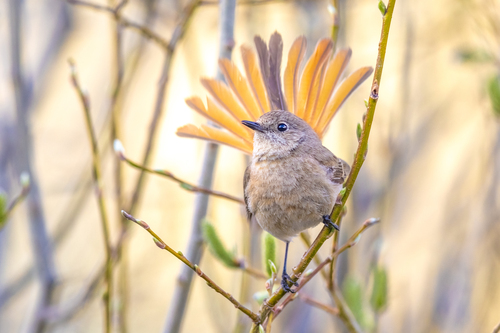
Rufous-backed Redstart (Phoenicurus erythronotus) Rufous-backed Redstart
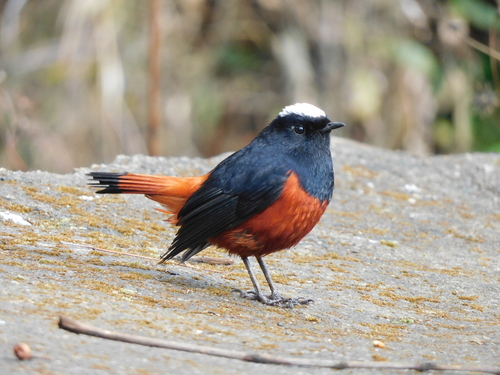
White-capped Redstart (Phoenicurus leucocephalus) White-capped Redstart

Media

Loading…

In short

The most reliable field mark to distinguish these two redstarts is the white cap on the White-capped Redstart, which is absent in the Rufous-backed Redstart. Both species share a similar structure and general coloration, but the White-capped Redstart's distinctive head pattern is a key identifier.

Identification tips

Size

Both species are similar in size, typical of redstarts, with no significant differences in structure such as bill or tail length.

Plumage

The Rufous-backed Redstart lacks the white cap found on the White-capped Redstart. Instead, it has a more uniform rufous back and lacks the stark contrast of the white head. Both species have rufous underparts and dark wings, but the White-capped Redstart's white head is unmistakable.

Behaviour

Both species exhibit typical redstart behavior such as tail-flicking and active foraging, with no notable behavioral differences for identification.

Habitat

Both species can be found in similar habitats such as open woodlands and scrubby areas, often near water, but specific habitat preferences may vary regionally.

Voice

Vocalizations are not the primary distinguishing feature, and both species have similar calls typical of redstarts. Field identification should rely more on visual cues.

Submit a better description

Use the same sections as the comparison. Your text is published immediately.

The most reliable field mark to distinguish these two redstarts is the white cap on the White-capped Redstart, which is absent in the Rufous-backed Redstart. Both species share a similar structure and general coloration, but the White-capped Redstart's distinctive head pattern is a key identifier.

  • Look for the white cap on the White-capped Redstart, absent in the Rufous-backed Redstart.
  • Note the uniform rufous back of the Rufous-backed Redstart compared to the contrasting head of the White-capped.
  • Both species have similar size and behavior, so focus on head pattern for identification.

Both species are similar in size, typical of redstarts, with no significant differences in structure such as bill or tail length.

The Rufous-backed Redstart lacks the white cap found on the White-capped Redstart. Instead, it has a more uniform rufous back and lacks the stark contrast of the white head. Both species have rufous underparts and dark wings, but the White-capped Redstart's white head is unmistakable.

Both species exhibit typical redstart behavior such as tail-flicking and active foraging, with no notable behavioral differences for identification.

Both species can be found in similar habitats such as open woodlands and scrubby areas, often near water, but specific habitat preferences may vary regionally.

Vocalizations are not the primary distinguishing feature, and both species have similar calls typical of redstarts. Field identification should rely more on visual cues.

Discard your changes?

You have unsaved edits. If you leave now, those changes will be lost.

Rufous-backed Redstart · White-capped Redstart · My Tricky Birds