Birdr

Rufous-banded Honeyeater vs Rufous-throated Honeyeater

Conopophila albogularis versus Conopophila rufogularis

Play a quiz with Rufous-banded Honeyeater and Rufous-throated Honeyeater
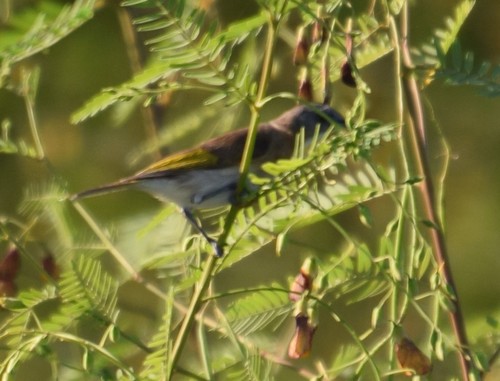
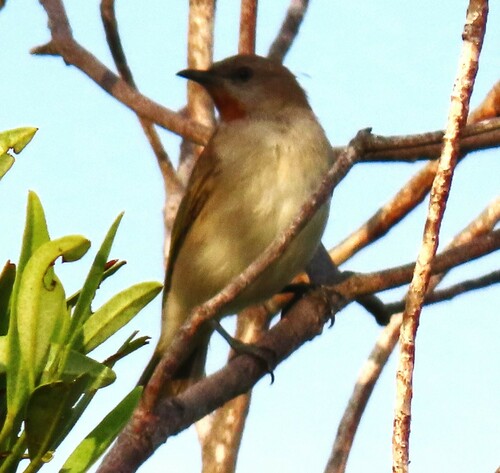
Rufous-banded Honeyeater (Conopophila albogularis) Rufous-banded Honeyeater
Rufous-throated Honeyeater (Conopophila rufogularis) Rufous-throated Honeyeater

Media

Loading…

In short

The Rufous-banded Honeyeater and Rufous-throated Honeyeater are both small, similarly structured honeyeaters, making them challenging to distinguish. The most reliable field mark is the throat coloration: Rufous-banded Honeyeater has a distinct rufous band across the chest, while the Rufous-throated Honeyeater features a more extensive rufous throat patch. Observing their vocalizations and habitat preferences can also aid in identification.

Identification tips

Size

Both species are similar in size, typical of small honeyeaters.

Plumage

The Rufous-banded Honeyeater has a rufous band across the chest, contrasting with its otherwise plain plumage. The Rufous-throated Honeyeater, on the other hand, has a more extensive rufous throat patch that stands out against its lighter underparts.

Behaviour

Both species exhibit typical honeyeater behavior, often seen foraging in trees and shrubs. They are active and can be observed feeding on nectar and insects.

Habitat

Both species inhabit similar environments, including woodlands and forests. However, local distribution may vary slightly, with Rufous-banded Honeyeaters sometimes found in more coastal areas.

Voice

Vocalizations are similar and not the most reliable for differentiation. Both species produce typical honeyeater calls, but local variations might exist.

Submit a better description

Use the same sections as the comparison. Your text is published immediately.

The Rufous-banded Honeyeater and Rufous-throated Honeyeater are both small, similarly structured honeyeaters, making them challenging to distinguish. The most reliable field mark is the throat coloration: Rufous-banded Honeyeater has a distinct rufous band across the chest, while the Rufous-throated Honeyeater features a more extensive rufous throat patch. Observing their vocalizations and habitat preferences can also aid in identification.

  • Look for the rufous band across the chest in Rufous-banded Honeyeater.
  • Check for the extensive rufous throat patch in Rufous-throated Honeyeater.
  • Consider habitat and local distribution as supporting clues.
  • Use vocalizations cautiously, as they are similar.

Both species are similar in size, typical of small honeyeaters.

The Rufous-banded Honeyeater has a rufous band across the chest, contrasting with its otherwise plain plumage. The Rufous-throated Honeyeater, on the other hand, has a more extensive rufous throat patch that stands out against its lighter underparts.

Both species exhibit typical honeyeater behavior, often seen foraging in trees and shrubs. They are active and can be observed feeding on nectar and insects.

Both species inhabit similar environments, including woodlands and forests. However, local distribution may vary slightly, with Rufous-banded Honeyeaters sometimes found in more coastal areas.

Vocalizations are similar and not the most reliable for differentiation. Both species produce typical honeyeater calls, but local variations might exist.

Discard your changes?

You have unsaved edits. If you leave now, those changes will be lost.

Rufous-banded Honeyeater · Rufous-throated Honeyeater · My Tricky Birds