Rufous-bellied Niltava vs Mangrove Blue Flycatcher
Niltava sundara versus Cyornis rufigastra
Play a quiz with Rufous-bellied Niltava and Mangrove Blue Flycatcher
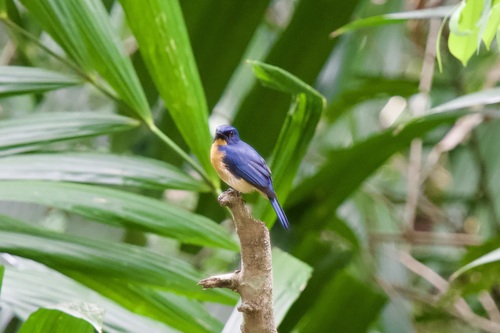
Rufous-bellied Niltava
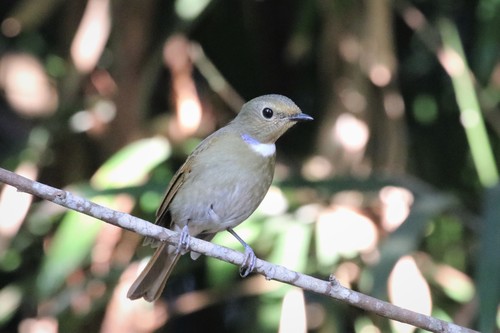
Mangrove Blue Flycatcher
In short
The Rufous-bellied Niltava and Mangrove Blue Flycatcher are both small, colorful flycatchers, but they can be distinguished by their habitat preferences and plumage details. The Niltava is more likely found in forested areas, while the Flycatcher is associated with mangrove environments. Key visual differences include the Niltava's rufous belly compared to the Flycatcher's more uniform blue tones.
Identification tips
- Check the belly color: Rufous-bellied Niltava has a rufous belly, while the Mangrove Blue Flycatcher is more uniformly blue. 2. Consider the habitat: Niltava in forests, Flycatcher in mangroves. 3. Use location as a clue: If you're in a mangrove, it's likely the Mangrove Blue Flycatcher.
Size
Both species are similar in size, typical of small flycatchers, with no significant difference in overall body size.
Plumage
The Rufous-bellied Niltava has a distinctive rufous belly and a deep blue upper body, while the Mangrove Blue Flycatcher is more uniformly blue with less contrast between the belly and upper parts. The Niltava's rufous coloration is a key distinguishing feature.
Behaviour
Both species exhibit typical flycatcher behavior, such as sallying from perches to catch insects. There are no significant behavioral differences noted in the field.
Habitat
The Rufous-bellied Niltava is found in forested areas, often at higher elevations, whereas the Mangrove Blue Flycatcher is typically associated with mangrove habitats and coastal regions.
Voice
Vocalizations are not well-documented for field differentiation, but both species have typical flycatcher calls. Observers should rely more on visual and habitat cues.
Rufous-bellied Niltava · Mangrove Blue Flycatcher · My Tricky Birds