Birdr

Rufous Cacholote vs Yellow-chinned Spinetail

Pseudoseisura unirufa versus Certhiaxis cinnamomeus

Play a quiz with Rufous Cacholote and Yellow-chinned Spinetail
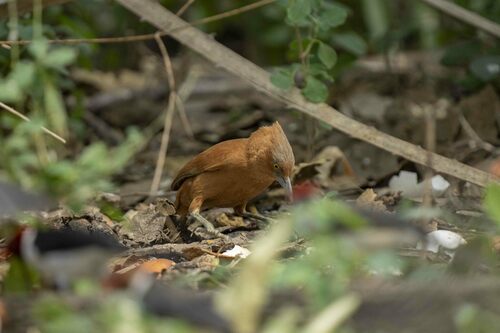
Rufous Cacholote (Pseudoseisura unirufa) Rufous Cacholote
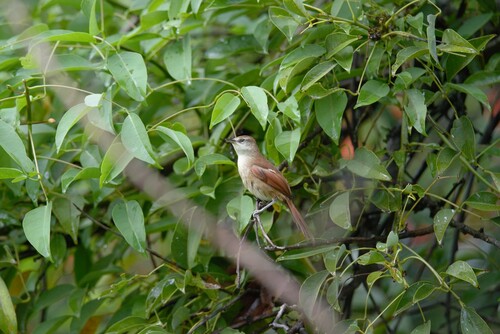
Yellow-chinned Spinetail (Certhiaxis cinnamomeus) Yellow-chinned Spinetail

Media

Loading…

In short

The Rufous Cacholote and Yellow-chinned Spinetail can be distinguished by their habitat preferences and plumage details. The Rufous Cacholote is more uniformly rufous, while the Yellow-chinned Spinetail has a bicolored appearance with a distinctive yellow chin that is often hard to see.

Identification tips

  1. Look for the habitat: dry woodlands for Rufous Cacholote, wet areas for Yellow-chinned Spinetail. 2. Note the plumage: uniformly rufous for Rufous Cacholote, bicolored with a yellow chin for Yellow-chinned Spinetail. 3. Listen for the Yellow-chinned Spinetail's churring rattle. 4. Consider size and structure: Rufous Cacholote is larger and bulkier.

Size

Rufous Cacholote is larger and more robust compared to the smaller, more delicate Yellow-chinned Spinetail.

Plumage

Rufous Cacholote is uniformly rufous, while the Yellow-chinned Spinetail is rufous above and white below with a subtle yellow chin and pale grayish superciliary.

Behaviour

Both species are active and conspicuous, but the Yellow-chinned Spinetail is noted for its frequent churring rattle.

Habitat

Rufous Cacholote is typically found in dry, open woodlands, whereas the Yellow-chinned Spinetail prefers wet habitats like reed beds, ditches, and mangroves.

Voice

Yellow-chinned Spinetail is known for its churring rattle, which is a key auditory cue.

Submit a better description

Use the same sections as the comparison. Your text is published immediately.

The Rufous Cacholote and Yellow-chinned Spinetail can be distinguished by their habitat preferences and plumage details. The Rufous Cacholote is more uniformly rufous, while the Yellow-chinned Spinetail has a bicolored appearance with a distinctive yellow chin that is often hard to see.

  1. Look for the habitat: dry woodlands for Rufous Cacholote, wet areas for Yellow-chinned Spinetail. 2. Note the plumage: uniformly rufous for Rufous Cacholote, bicolored with a yellow chin for Yellow-chinned Spinetail. 3. Listen for the Yellow-chinned Spinetail's churring rattle. 4. Consider size and structure: Rufous Cacholote is larger and bulkier.

Rufous Cacholote is larger and more robust compared to the smaller, more delicate Yellow-chinned Spinetail.

Rufous Cacholote is uniformly rufous, while the Yellow-chinned Spinetail is rufous above and white below with a subtle yellow chin and pale grayish superciliary.

Both species are active and conspicuous, but the Yellow-chinned Spinetail is noted for its frequent churring rattle.

Rufous Cacholote is typically found in dry, open woodlands, whereas the Yellow-chinned Spinetail prefers wet habitats like reed beds, ditches, and mangroves.

Yellow-chinned Spinetail is known for its churring rattle, which is a key auditory cue.

Discard your changes?

You have unsaved edits. If you leave now, those changes will be lost.

Rufous Cacholote · Yellow-chinned Spinetail · My Tricky Birds