Birdr

Rufous-capped Antshrike vs Bolivian Slaty-Antshrike

Thamnophilus ruficapillus versus Thamnophilus sticturus

Play a quiz with Rufous-capped Antshrike and Bolivian Slaty-Antshrike
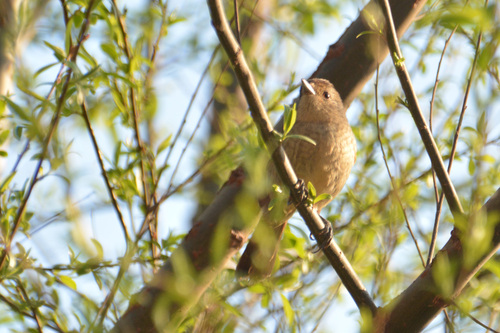
Rufous-capped Antshrike (Thamnophilus ruficapillus) Rufous-capped Antshrike
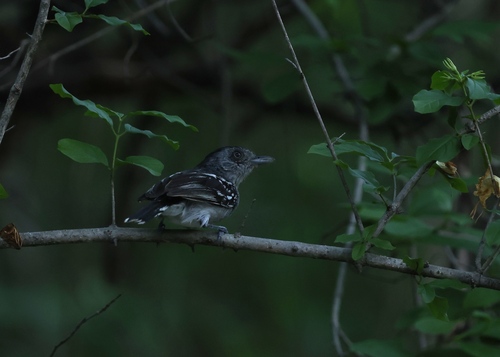
Bolivian Slaty-Antshrike (Thamnophilus sticturus) Bolivian Slaty-Antshrike

Media

Loading…

In short

The Rufous-capped Antshrike and Bolivian Slaty-Antshrike are both members of the Thamnophilus genus, but they can be distinguished by their plumage and habitat preferences. The Rufous-capped Antshrike typically shows a rufous cap and lighter underparts, while the Bolivian Slaty-Antshrike has a more uniform slaty-gray appearance. Both species inhabit forest edges, but the Rufous-capped is more often found in dense scrub.

Identification tips

Size

Both species are similar in size, typical of antshrikes.

Plumage

The Rufous-capped Antshrike has a rufous cap and lighter underparts, with variations including light brown or gray plumage. The Bolivian Slaty-Antshrike is more uniformly slaty-gray without the rufous cap.

Behaviour

Both species forage singly or in pairs, but the Rufous-capped Antshrike is more frequently seen at the edge of forests and in dense scrub.

Habitat

Rufous-capped Antshrikes are found at the edge of humid forests, in second growth, and dense scrub. The Bolivian Slaty-Antshrike also prefers forest edges but is less associated with dense scrub.

Voice

Specific vocal differences are not detailed in the sources, but listening for variations in calls may assist in identification.

Submit a better description

Use the same sections as the comparison. Your text is published immediately.

The Rufous-capped Antshrike and Bolivian Slaty-Antshrike are both members of the Thamnophilus genus, but they can be distinguished by their plumage and habitat preferences. The Rufous-capped Antshrike typically shows a rufous cap and lighter underparts, while the Bolivian Slaty-Antshrike has a more uniform slaty-gray appearance. Both species inhabit forest edges, but the Rufous-capped is more often found in dense scrub.

  • Look for the rufous cap on the Rufous-capped Antshrike.
  • Note the uniform slaty-gray plumage of the Bolivian Slaty-Antshrike.
  • Observe habitat: Rufous-capped may be in denser scrub.
  • Use vocalizations if known, as they might differ.

Both species are similar in size, typical of antshrikes.

The Rufous-capped Antshrike has a rufous cap and lighter underparts, with variations including light brown or gray plumage. The Bolivian Slaty-Antshrike is more uniformly slaty-gray without the rufous cap.

Both species forage singly or in pairs, but the Rufous-capped Antshrike is more frequently seen at the edge of forests and in dense scrub.

Rufous-capped Antshrikes are found at the edge of humid forests, in second growth, and dense scrub. The Bolivian Slaty-Antshrike also prefers forest edges but is less associated with dense scrub.

Specific vocal differences are not detailed in the sources, but listening for variations in calls may assist in identification.

Discard your changes?

You have unsaved edits. If you leave now, those changes will be lost.

Rufous-capped Antshrike · Bolivian Slaty-Antshrike · My Tricky Birds