Rufous-capped Spinetail vs Spix's Spinetail
Synallaxis ruficapilla versus Synallaxis spixi
Play a quiz with Rufous-capped Spinetail and Spix's Spinetail
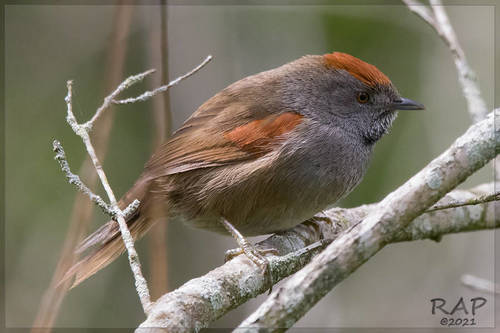
Rufous-capped Spinetail
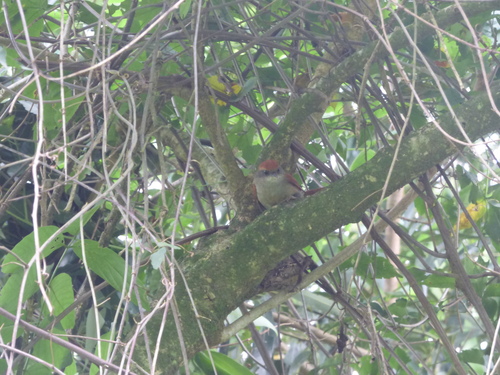
Spix's Spinetail
In short
The Rufous-capped Spinetail and Spix's Spinetail can be distinguished by their head coloration and habitat preferences. The Rufous-capped Spinetail has a distinct rufous crown, while Spix's Spinetail lacks this feature. Both species are part of the Synallaxis genus, making structural differences subtle.
Identification tips
Look for the rufous crown on the Rufous-capped Spinetail as the most reliable field mark. Check the habitat: Rufous-capped prefers bamboo-rich forests, while Spix's is found in drier, scrubby areas. Listen for vocalizations, but note that specific differences are not well-documented.
Size
Both species are similar in size, typical of spinetails, with no significant difference in overall body length or structure.
Plumage
The Rufous-capped Spinetail has a notable rufous crown, which is a key distinguishing feature. In contrast, Spix's Spinetail does not have a rufous crown, and instead, it has a more uniform brownish coloration on the head. Both have similar overall brownish plumage typical of spinetails.
Behaviour
Both species are generally secretive and can be difficult to observe, but the Rufous-capped Spinetail is noted to be one of the easier species to see within its genus.
Habitat
The Rufous-capped Spinetail is often found in montane and tropical lowland evergreen forests, frequently associating with bamboo. Spix's Spinetail prefers more open and drier habitats, such as scrubby areas and secondary growth.
Voice
Vocalizations are not well-documented for both species, but they are likely to have distinct calls typical of spinetails. Specific differences in song or call are not detailed in the sources.
Rufous-capped Spinetail · Spix's Spinetail · My Tricky Birds