
Birdr

Rufous-chested Flycatcher vs Plumbeous Redstart

Ficedula dumetoria versus Phoenicurus fuliginosus

Play a quiz with Rufous-chested Flycatcher and Plumbeous Redstart
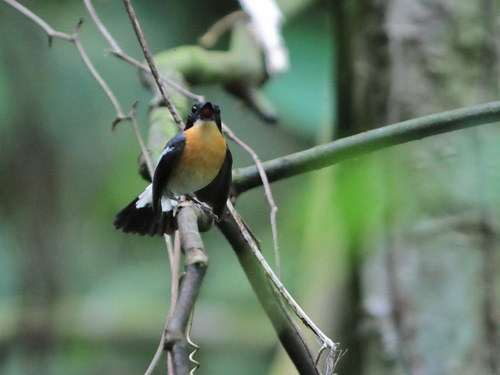
Rufous-chested Flycatcher (Ficedula dumetoria) Rufous-chested Flycatcher
Plumbeous Redstart (Phoenicurus fuliginosus) Plumbeous Redstart

Media

Loading…

In short

The Rufous-chested Flycatcher and Plumbeous Redstart can be distinguished by their plumage and behavior. The Rufous-chested Flycatcher has a distinct rufous chest, while the Plumbeous Redstart is characterized by its bluish-grey plumage and contrasting tail. Observing their preferred habitats and behaviors can also aid in identification.

Identification tips

  1. Look for the rufous chest on the Rufous-chested Flycatcher. 2. Note the bluish-grey plumage and reddish tail of the Plumbeous Redstart. 3. Observe behavior: Plumbeous Redstarts often fan their tails and are near water. 4. Consider habitat: Rufous-chested Flycatchers prefer forests, while Plumbeous Redstarts are near streams.

Size

Both species are small, but the Plumbeous Redstart is generally more robust with a slightly larger body and longer tail.

Plumage

The Rufous-chested Flycatcher features a prominent rufous chest and a more subdued overall coloration. In contrast, the Plumbeous Redstart has a striking bluish-grey body with a contrasting reddish tail, especially noticeable in males.

Behaviour

The Plumbeous Redstart often engages in tail-fanning and is more likely to be seen near fast-flowing streams. The Rufous-chested Flycatcher is more discreet and less active in open areas.

Habitat

Rufous-chested Flycatchers are typically found in forested areas, while Plumbeous Redstarts prefer rocky streams and riversides.

Voice

The vocalizations of these species are not well-documented for field differentiation, but the Plumbeous Redstart is known for its varied and melodious song.

Submit a better description

Use the same sections as the comparison. Your text is published immediately.

The Rufous-chested Flycatcher and Plumbeous Redstart can be distinguished by their plumage and behavior. The Rufous-chested Flycatcher has a distinct rufous chest, while the Plumbeous Redstart is characterized by its bluish-grey plumage and contrasting tail. Observing their preferred habitats and behaviors can also aid in identification.

  1. Look for the rufous chest on the Rufous-chested Flycatcher. 2. Note the bluish-grey plumage and reddish tail of the Plumbeous Redstart. 3. Observe behavior: Plumbeous Redstarts often fan their tails and are near water. 4. Consider habitat: Rufous-chested Flycatchers prefer forests, while Plumbeous Redstarts are near streams.

Both species are small, but the Plumbeous Redstart is generally more robust with a slightly larger body and longer tail.

The Rufous-chested Flycatcher features a prominent rufous chest and a more subdued overall coloration. In contrast, the Plumbeous Redstart has a striking bluish-grey body with a contrasting reddish tail, especially noticeable in males.

The Plumbeous Redstart often engages in tail-fanning and is more likely to be seen near fast-flowing streams. The Rufous-chested Flycatcher is more discreet and less active in open areas.

Rufous-chested Flycatchers are typically found in forested areas, while Plumbeous Redstarts prefer rocky streams and riversides.

The vocalizations of these species are not well-documented for field differentiation, but the Plumbeous Redstart is known for its varied and melodious song.

Discard your changes?

You have unsaved edits. If you leave now, those changes will be lost.

Rufous-chested Flycatcher · Plumbeous Redstart · My Tricky Birds