Birdr

Rufous-crowned Bee-eater vs Lazuli Bunting

Merops americanus versus Passerina amoena

Play a quiz with Rufous-crowned Bee-eater and Lazuli Bunting

Rufous-crowned Bee-eater (Merops americanus) Rufous-crowned Bee-eater
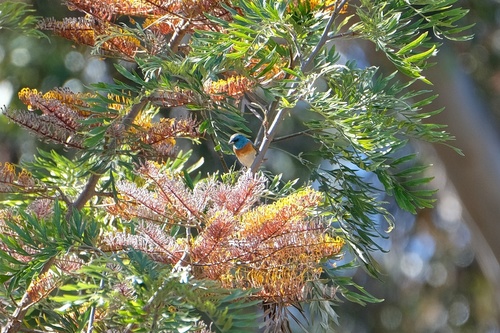
Lazuli Bunting (Passerina amoena) Lazuli Bunting

Media

Loading…

In short

The Rufous-crowned Bee-eater and Lazuli Bunting are easily distinguished by their plumage and habitat preferences. The bee-eater is a tropical bird with vibrant green and rufous colors, while the bunting is a small songbird with striking blue plumage, often found in North American brushy habitats.

Identification tips

Size

The Rufous-crowned Bee-eater is larger than the Lazuli Bunting, with a more elongated body typical of bee-eaters.

Plumage

The Rufous-crowned Bee-eater has a predominantly green body with a rufous crown and throat, while the Lazuli Bunting male is bright blue with a white belly and a rusty breast band. Female buntings are more subdued in color, with brownish tones.

Behaviour

Bee-eaters are often seen in open areas catching insects mid-air, whereas Lazuli Buntings are more likely to be found singing from perches or visiting feeders.

Habitat

Rufous-crowned Bee-eaters inhabit tropical regions, often in open woodlands or near water. Lazuli Buntings are found in brushy habitats across the western United States and southwestern Canada.

Voice

The Lazuli Bunting is known for its persistent and varied song, often heard during the breeding season. The Rufous-crowned Bee-eater's vocalizations are not as prominently noted in the sources.

Submit a better description

Use the same sections as the comparison. Your text is published immediately.

The Rufous-crowned Bee-eater and Lazuli Bunting are easily distinguished by their plumage and habitat preferences. The bee-eater is a tropical bird with vibrant green and rufous colors, while the bunting is a small songbird with striking blue plumage, often found in North American brushy habitats.

  • Plumage: Look for the bee-eater's green and rufous colors versus the bunting's blue and white.
  • Size and Shape: Note the larger size and elongated shape of the bee-eater compared to the smaller, more compact bunting.
  • Habitat: Consider the location; bee-eaters are tropical, while buntings are found in North America.
  • Behavior: Observe feeding habits; bee-eaters catch insects in flight, buntings may visit feeders.

The Rufous-crowned Bee-eater is larger than the Lazuli Bunting, with a more elongated body typical of bee-eaters.

The Rufous-crowned Bee-eater has a predominantly green body with a rufous crown and throat, while the Lazuli Bunting male is bright blue with a white belly and a rusty breast band. Female buntings are more subdued in color, with brownish tones.

Bee-eaters are often seen in open areas catching insects mid-air, whereas Lazuli Buntings are more likely to be found singing from perches or visiting feeders.

Rufous-crowned Bee-eaters inhabit tropical regions, often in open woodlands or near water. Lazuli Buntings are found in brushy habitats across the western United States and southwestern Canada.

The Lazuli Bunting is known for its persistent and varied song, often heard during the breeding season. The Rufous-crowned Bee-eater's vocalizations are not as prominently noted in the sources.

Discard your changes?

You have unsaved edits. If you leave now, those changes will be lost.

Rufous-crowned Bee-eater · Lazuli Bunting · My Tricky Birds