Birdr

Rufous-crowned Bee-eater vs Olive Bee-eater

Merops americanus versus Merops superciliosus

Play a quiz with Rufous-crowned Bee-eater and Olive Bee-eater

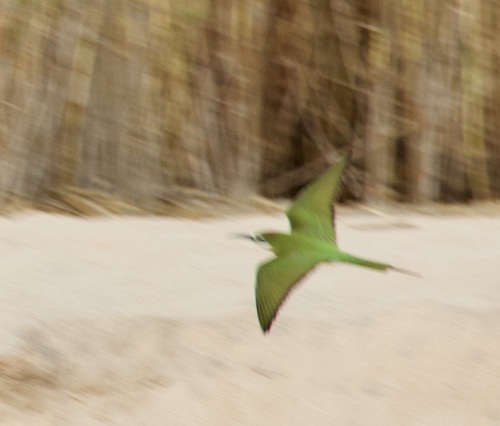
Rufous-crowned Bee-eater (Merops americanus) Rufous-crowned Bee-eater
Olive Bee-eater (Merops superciliosus) Olive Bee-eater

Media

Loading…

In short

The Rufous-crowned Bee-eater and Olive Bee-eater can be distinguished by their head coloration and tail shape. The Rufous-crowned Bee-eater has a distinct rufous crown, while the Olive Bee-eater features a more uniform olive head with a prominent supercilium. Both species share a similar body shape typical of bee-eaters.

Identification tips

  1. Head coloration: Look for the rufous crown on the Rufous-crowned Bee-eater versus the olive head with a white supercilium on the Olive Bee-eater. 2. Tail shape: The Olive Bee-eater often has a more pronounced forked tail. 3. Plumage tone: Note the more vibrant green of the Rufous-crowned Bee-eater compared to the muted tones of the Olive Bee-eater.

Size

Both species are similar in size, typical of medium-sized bee-eaters.

Plumage

The Rufous-crowned Bee-eater has a rufous crown and a more vibrant green body, while the Olive Bee-eater displays an olive head with a noticeable white supercilium and a generally more muted green body.

Behaviour

Both species exhibit typical bee-eater behavior, such as aerial insect hunting and perching on exposed branches.

Habitat

Both species are found in open habitats, but the Olive Bee-eater is more widespread in savannas and open woodlands, whereas the Rufous-crowned Bee-eater may be more localized.

Voice

Vocalizations are not distinctly different in the field, as both species have similar calls typical of bee-eaters.

Submit a better description

Use the same sections as the comparison. Your text is published immediately.

The Rufous-crowned Bee-eater and Olive Bee-eater can be distinguished by their head coloration and tail shape. The Rufous-crowned Bee-eater has a distinct rufous crown, while the Olive Bee-eater features a more uniform olive head with a prominent supercilium. Both species share a similar body shape typical of bee-eaters.

  1. Head coloration: Look for the rufous crown on the Rufous-crowned Bee-eater versus the olive head with a white supercilium on the Olive Bee-eater. 2. Tail shape: The Olive Bee-eater often has a more pronounced forked tail. 3. Plumage tone: Note the more vibrant green of the Rufous-crowned Bee-eater compared to the muted tones of the Olive Bee-eater.

Both species are similar in size, typical of medium-sized bee-eaters.

The Rufous-crowned Bee-eater has a rufous crown and a more vibrant green body, while the Olive Bee-eater displays an olive head with a noticeable white supercilium and a generally more muted green body.

Both species exhibit typical bee-eater behavior, such as aerial insect hunting and perching on exposed branches.

Both species are found in open habitats, but the Olive Bee-eater is more widespread in savannas and open woodlands, whereas the Rufous-crowned Bee-eater may be more localized.

Vocalizations are not distinctly different in the field, as both species have similar calls typical of bee-eaters.

Discard your changes?

You have unsaved edits. If you leave now, those changes will be lost.

Rufous-crowned Bee-eater · Olive Bee-eater · My Tricky Birds