Birdr

Rufous-fronted Babbler vs Grey-bellied Wren-Babbler

Cyanoderma rufifrons versus Spelaeornis reptatus

Play a quiz with Rufous-fronted Babbler and Grey-bellied Wren-Babbler
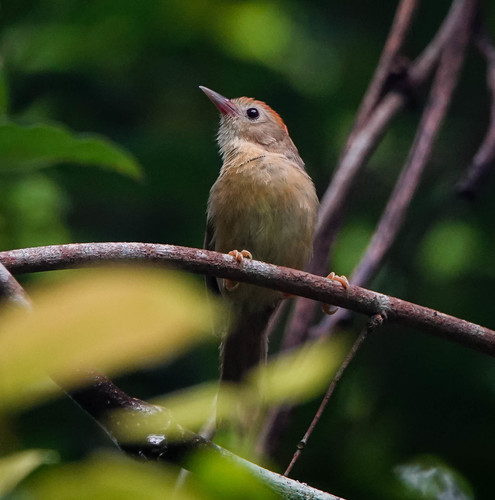
Rufous-fronted Babbler (Cyanoderma rufifrons) Rufous-fronted Babbler
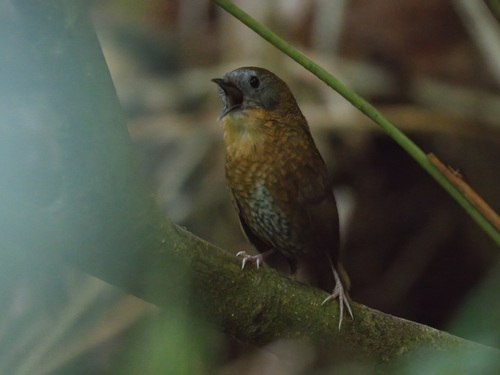
Grey-bellied Wren-Babbler (Spelaeornis reptatus) Grey-bellied Wren-Babbler

Media

Loading…

In short

The Rufous-fronted Babbler and the Grey-bellied Wren-Babbler can be distinguished by their head markings and body coloration. The Rufous-fronted Babbler has a distinctive rufous forehead, while the Grey-bellied Wren-Babbler features a more uniformly grey belly. Both species inhabit dense undergrowth, making them challenging to observe.

Identification tips

Size

Both species are small, but the Grey-bellied Wren-Babbler is typically slightly smaller and more compact.

Plumage

The Rufous-fronted Babbler has a rufous forehead and a generally warmer brown plumage, while the Grey-bellied Wren-Babbler has a more uniform grey belly and lacks the rufous forehead.

Behaviour

Both species are skulking and often remain low in dense vegetation, but the Grey-bellied Wren-Babbler may be more likely to be seen in mixed-species flocks.

Habitat

Both species prefer dense undergrowth in forested areas, but the Rufous-fronted Babbler is more often found in subtropical and tropical moist lowland forests, while the Grey-bellied Wren-Babbler may inhabit higher elevations.

Voice

The Rufous-fronted Babbler typically has a more musical and varied song, while the Grey-bellied Wren-Babbler's vocalizations are less documented but generally more subdued.

Submit a better description

Use the same sections as the comparison. Your text is published immediately.

The Rufous-fronted Babbler and the Grey-bellied Wren-Babbler can be distinguished by their head markings and body coloration. The Rufous-fronted Babbler has a distinctive rufous forehead, while the Grey-bellied Wren-Babbler features a more uniformly grey belly. Both species inhabit dense undergrowth, making them challenging to observe.

  • Look for the rufous forehead on the Rufous-fronted Babbler.
  • Check for a uniform grey belly on the Grey-bellied Wren-Babbler.
  • Observe behavior: both are elusive, but the Grey-bellied Wren-Babbler may join mixed-species flocks.
  • Listen for song differences: the Rufous-fronted Babbler has a more musical song.

Both species are small, but the Grey-bellied Wren-Babbler is typically slightly smaller and more compact.

The Rufous-fronted Babbler has a rufous forehead and a generally warmer brown plumage, while the Grey-bellied Wren-Babbler has a more uniform grey belly and lacks the rufous forehead.

Both species are skulking and often remain low in dense vegetation, but the Grey-bellied Wren-Babbler may be more likely to be seen in mixed-species flocks.

Both species prefer dense undergrowth in forested areas, but the Rufous-fronted Babbler is more often found in subtropical and tropical moist lowland forests, while the Grey-bellied Wren-Babbler may inhabit higher elevations.

The Rufous-fronted Babbler typically has a more musical and varied song, while the Grey-bellied Wren-Babbler's vocalizations are less documented but generally more subdued.

Discard your changes?

You have unsaved edits. If you leave now, those changes will be lost.

Rufous-fronted Babbler · Grey-bellied Wren-Babbler · My Tricky Birds