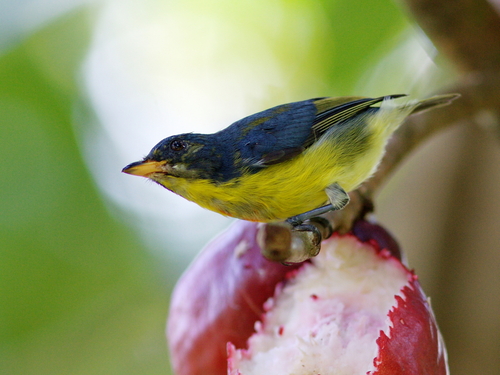
Rufous-gorgeted Flycatcher vs Crimson-breasted Flowerpecker
Ficedula strophiata versus Prionochilus percussus
Play a quiz with Rufous-gorgeted Flycatcher and Crimson-breasted Flowerpecker
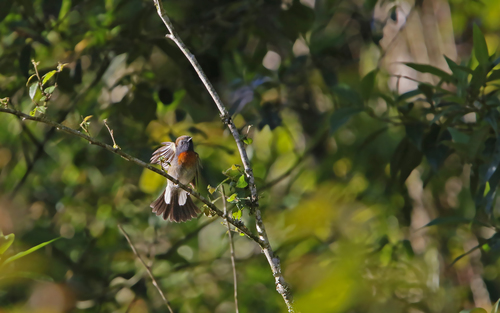
Rufous-gorgeted Flycatcher
Crimson-breasted Flowerpecker
In short
The Rufous-gorgeted Flycatcher and the Crimson-breasted Flowerpecker are distinct in both appearance and behavior. The flycatcher is characterized by its rufous throat patch, while the flowerpecker displays a striking crimson breast. Their habitats and feeding behaviors also differ significantly.
Identification tips
1. Throat and Breast Color: Look for the rufous throat patch on the flycatcher and the bright crimson breast on the flowerpecker. 2. Size and Shape: Note the larger size and more upright posture of the flycatcher compared to the smaller, more compact flowerpecker. 3. Behavior: Observe feeding habits; flycatchers sally for insects, while flowerpeckers are often seen feeding on fruits. 4. Habitat: Consider the habitat; flycatchers are more common in montane regions, while flowerpeckers are found in lowland forests.
Size
The Rufous-gorgeted Flycatcher is generally larger than the Crimson-breasted Flowerpecker.
Plumage
The Rufous-gorgeted Flycatcher has a notable rufous patch on the throat and a generally more muted plumage with grey and brown tones. In contrast, the Crimson-breasted Flowerpecker is vibrant with a bright crimson breast and a more compact, colorful appearance.
Behaviour
The Rufous-gorgeted Flycatcher often perches openly and sallies for insects, while the Crimson-breasted Flowerpecker is more active in the canopy, feeding on fruits and nectar.
Habitat
The flycatcher is typically found in montane forests, while the flowerpecker prefers lowland and submontane forests, often in more tropical regions.
Voice
The Rufous-gorgeted Flycatcher's song is a series of melodious whistles, whereas the Crimson-breasted Flowerpecker's call is a high-pitched, rapid series of notes.
Rufous-gorgeted Flycatcher · Crimson-breasted Flowerpecker · My Tricky Birds