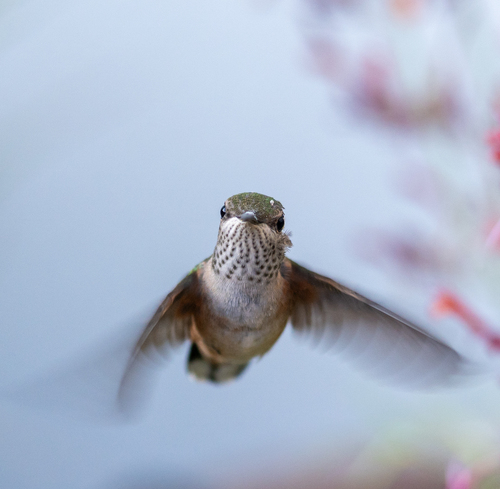
Rufous Hummingbird vs Broad-tailed Hummingbird
Selasphorus rufus versus Selasphorus platycercus
Play a quiz with Rufous Hummingbird and Broad-tailed Hummingbird
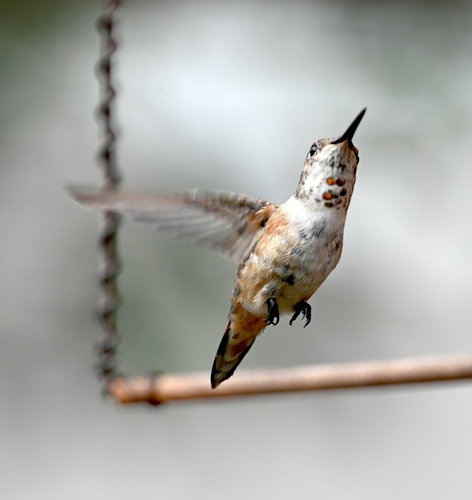
Rufous Hummingbird
Broad-tailed Hummingbird
In short
To distinguish the Rufous Hummingbird from the Broad-tailed Hummingbird, focus on the tail and plumage. The Rufous Hummingbird typically has a more uniformly rufous body and tail, while the Broad-tailed Hummingbird features a green back and a distinctive metallic wing trill during flight.
Identification tips
- Look for the rufous body and tail in Rufous Hummingbirds, especially in males. 2. Listen for the Broad-tailed Hummingbird's wing trill during flight. 3. Note the green back and rose-red throat of male Broad-tailed Hummingbirds. 4. Consider the habitat: higher elevations may favor Broad-tailed Hummingbirds.
Size
Both species are similar in size, though the Broad-tailed Hummingbird may appear slightly larger due to its longer tail.
Plumage
The Rufous Hummingbird is predominantly rufous with a bright orange-red throat in males. Females and immatures have a rufous wash on the flanks and tail. The Broad-tailed Hummingbird has a green back and a rose-red throat patch in males, with females and immatures showing more green on the back and a less pronounced rufous wash.
Behaviour
Both species exhibit similar feeding behaviors, hovering to feed on nectar and catching insects in flight. However, the Broad-tailed Hummingbird is known for its spectacular aerial displays and loud wing trill.
Habitat
Rufous Hummingbirds are often found in open areas, gardens, and forests during migration, while Broad-tailed Hummingbirds prefer montane meadows and open woodlands, often at higher elevations.
Voice
The Broad-tailed Hummingbird is noted for its loud, metallic wing trill during flight, which is a key auditory cue. Rufous Hummingbirds do not produce this sound.
Rufous Hummingbird · Broad-tailed Hummingbird · My Tricky Birds