Birdr

Rufous-naped Wren vs Black-bellied Wren

Campylorhynchus rufinucha versus Pheugopedius fasciatoventris

Play a quiz with Rufous-naped Wren and Black-bellied Wren
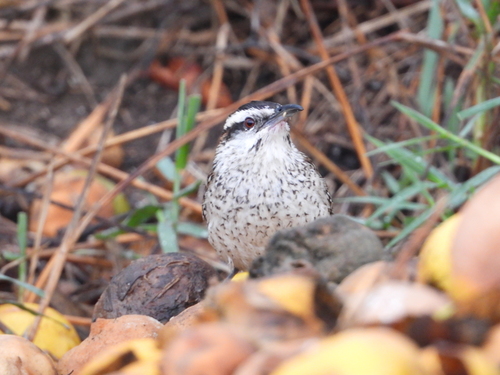
Rufous-naped Wren (Campylorhynchus rufinucha) Rufous-naped Wren
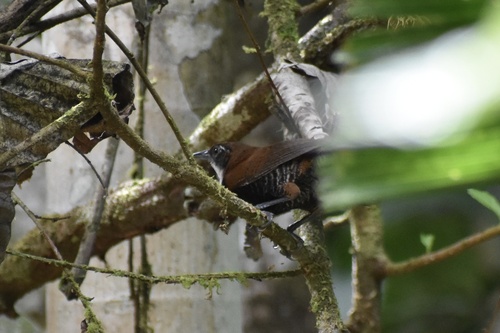
Black-bellied Wren (Pheugopedius fasciatoventris) Black-bellied Wren

Media

Loading…

In short

The Rufous-naped Wren and Black-bellied Wren are both members of the wren family but differ significantly in plumage and habitat preferences. The Rufous-naped Wren is more likely to be seen in open areas with scattered trees, while the Black-bellied Wren prefers dense undergrowth. Key differences include their belly coloration and habitat choice.

Identification tips

Look for the rufous crown and nape on the Rufous-naped Wren versus the black belly of the Black-bellied Wren. Consider habitat: open areas suggest Rufous-naped, while dense undergrowth points to Black-bellied. Listen for the duet style: Rufous-naped has a more varied song, while Black-bellied's duet is rich and liquid.

Size

Both species are similar in size, typical of medium-sized wrens, but the Rufous-naped Wren may appear slightly bulkier due to its more robust build.

Plumage

The Rufous-naped Wren has a distinctive rufous crown and nape, with a white throat and underparts, and a barred tail. In contrast, the Black-bellied Wren features a black belly and a more uniform dark upper body, lacking the rufous tones.

Behaviour

Rufous-naped Wrens are often seen in pairs or small groups, actively foraging in open areas, while Black-bellied Wrens are more secretive, typically found alone or in pairs within dense vegetation.

Habitat

Rufous-naped Wrens prefer open woodlands and scrubby areas with scattered trees, whereas Black-bellied Wrens are found in dense, humid undergrowth of forests and thickets.

Voice

Rufous-naped Wrens have a loud, varied song often delivered in duets, whereas Black-bellied Wrens are known for their rich, liquid duets with alternating male and female parts.

Submit a better description

Use the same sections as the comparison. Your text is published immediately.

The Rufous-naped Wren and Black-bellied Wren are both members of the wren family but differ significantly in plumage and habitat preferences. The Rufous-naped Wren is more likely to be seen in open areas with scattered trees, while the Black-bellied Wren prefers dense undergrowth. Key differences include their belly coloration and habitat choice.

Look for the rufous crown and nape on the Rufous-naped Wren versus the black belly of the Black-bellied Wren. Consider habitat: open areas suggest Rufous-naped, while dense undergrowth points to Black-bellied. Listen for the duet style: Rufous-naped has a more varied song, while Black-bellied's duet is rich and liquid.

Both species are similar in size, typical of medium-sized wrens, but the Rufous-naped Wren may appear slightly bulkier due to its more robust build.

The Rufous-naped Wren has a distinctive rufous crown and nape, with a white throat and underparts, and a barred tail. In contrast, the Black-bellied Wren features a black belly and a more uniform dark upper body, lacking the rufous tones.

Rufous-naped Wrens are often seen in pairs or small groups, actively foraging in open areas, while Black-bellied Wrens are more secretive, typically found alone or in pairs within dense vegetation.

Rufous-naped Wrens prefer open woodlands and scrubby areas with scattered trees, whereas Black-bellied Wrens are found in dense, humid undergrowth of forests and thickets.

Rufous-naped Wrens have a loud, varied song often delivered in duets, whereas Black-bellied Wrens are known for their rich, liquid duets with alternating male and female parts.

Discard your changes?

You have unsaved edits. If you leave now, those changes will be lost.

Rufous-naped Wren · Black-bellied Wren · My Tricky Birds