Birdr

Rufous Sibia vs Black-headed Sibia

Heterophasia capistrata versus Heterophasia desgodinsi

Play a quiz with Rufous Sibia and Black-headed Sibia

Rufous Sibia (Heterophasia capistrata) Rufous Sibia
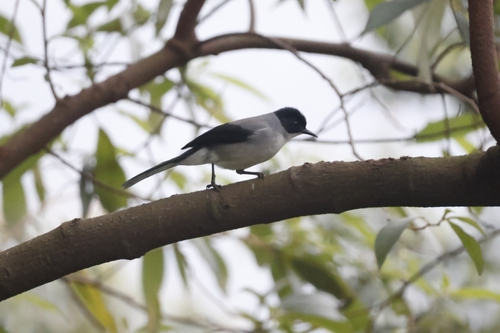
Black-headed Sibia (Heterophasia desgodinsi) Black-headed Sibia

Media

Loading…

In short

The Rufous Sibia and Black-headed Sibia are similar in size and structure, but differ notably in head coloration. The Rufous Sibia has a rufous body with a contrasting black head, while the Black-headed Sibia features a more uniformly dark head and back, blending into the body. Vocalizations can also aid in differentiation, though they are less reliable in the field.

Identification tips

  1. Look for the head coloration: Rufous Sibia has a stark black head contrasting with its rufous body, while Black-headed Sibia has a more uniform dark head and back. 2. Observe the plumage contrast: Rufous Sibia shows a clear contrast between the head and body, unlike the Black-headed Sibia. 3. Listen for vocal differences: Familiarize yourself with their calls if possible, as they can be a subtle clue.

Size

Both species are similar in size, typical of sibias, with no significant differences in overall body length or structure.

Plumage

The Rufous Sibia is characterized by its rufous body and contrasting black head. In contrast, the Black-headed Sibia has a more uniformly dark head and back, which blends into the body, lacking the stark contrast seen in the Rufous Sibia.

Behaviour

Both species exhibit similar behaviors typical of sibias, such as foraging in mixed-species flocks and being active and vocal.

Habitat

Both species inhabit similar montane forests and edges, often overlapping in range. They are typically found in subtropical or tropical moist montane forests.

Voice

Vocalizations are species-specific but can be difficult to distinguish in the field without prior experience. Rufous Sibia's calls are varied and musical, while Black-headed Sibia's calls may be less melodious.

Submit a better description

Use the same sections as the comparison. Your text is published immediately.

The Rufous Sibia and Black-headed Sibia are similar in size and structure, but differ notably in head coloration. The Rufous Sibia has a rufous body with a contrasting black head, while the Black-headed Sibia features a more uniformly dark head and back, blending into the body. Vocalizations can also aid in differentiation, though they are less reliable in the field.

  1. Look for the head coloration: Rufous Sibia has a stark black head contrasting with its rufous body, while Black-headed Sibia has a more uniform dark head and back. 2. Observe the plumage contrast: Rufous Sibia shows a clear contrast between the head and body, unlike the Black-headed Sibia. 3. Listen for vocal differences: Familiarize yourself with their calls if possible, as they can be a subtle clue.

Both species are similar in size, typical of sibias, with no significant differences in overall body length or structure.

The Rufous Sibia is characterized by its rufous body and contrasting black head. In contrast, the Black-headed Sibia has a more uniformly dark head and back, which blends into the body, lacking the stark contrast seen in the Rufous Sibia.

Both species exhibit similar behaviors typical of sibias, such as foraging in mixed-species flocks and being active and vocal.

Both species inhabit similar montane forests and edges, often overlapping in range. They are typically found in subtropical or tropical moist montane forests.

Vocalizations are species-specific but can be difficult to distinguish in the field without prior experience. Rufous Sibia's calls are varied and musical, while Black-headed Sibia's calls may be less melodious.

Discard your changes?

You have unsaved edits. If you leave now, those changes will be lost.

Rufous Sibia · Black-headed Sibia · My Tricky Birds