Birdr

Rufous-tailed Robin vs Siberian Blue Robin

Larvivora sibilans versus Larvivora cyane

Play a quiz with Rufous-tailed Robin and Siberian Blue Robin
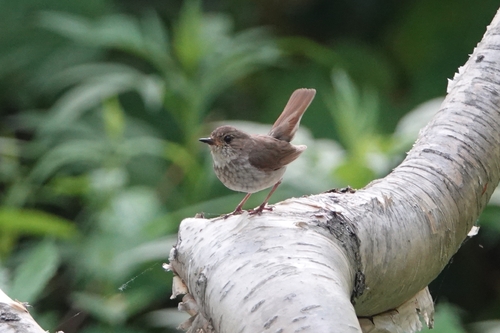
Rufous-tailed Robin (Larvivora sibilans) Rufous-tailed Robin
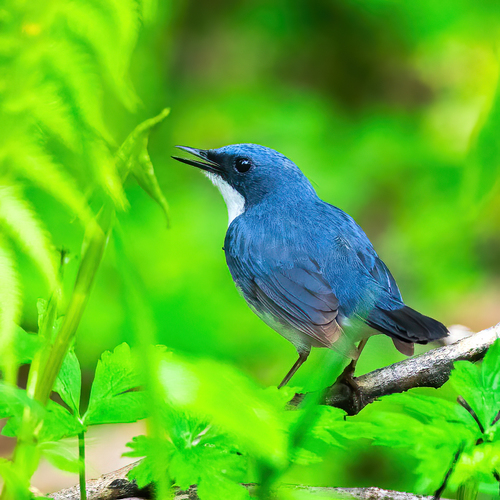
Siberian Blue Robin (Larvivora cyane) Siberian Blue Robin

Media

Loading…

In short

The Rufous-tailed Robin and Siberian Blue Robin are both small, ground-dwelling birds of the Old World Flycatchers family. The most reliable field mark is the tail: the Rufous-tailed Robin has a distinct rufous tail, while the Siberian Blue Robin is noted for its striking blue plumage in males. Both species can be found in similar habitats, but their plumage and vocalizations offer clues for differentiation.

Identification tips

  1. Tail Color: Look for the rufous tail in Rufous-tailed Robin. 2. Male Plumage: Note the bright blue of male Siberian Blue Robins. 3. Song: Listen for the more complex song of the Rufous-tailed Robin. 4. Habitat Preference: Consider the habitat; Siberian Blue Robins prefer moist, shady areas. 5. Seasonal Changes: Be aware that female and juvenile Siberian Blue Robins may resemble Rufous-tailed Robins outside the breeding season.

Size

Both species are similar in size, typical of small passerines.

Plumage

The Rufous-tailed Robin has a brownish overall plumage with a notable rufous tail, while the male Siberian Blue Robin is vibrant blue with a white belly. Females and juveniles of the Siberian Blue Robin are more subdued in color, resembling the Rufous-tailed Robin but lacking the rufous tail.

Behaviour

Both species are ground-dwelling and often forage on the forest floor, making behavior a less reliable differentiator.

Habitat

Both species inhabit dense undergrowth in forests, often near water, during breeding season. However, the Siberian Blue Robin is more associated with moist, shady areas.

Voice

The Rufous-tailed Robin has a more melodious and varied song compared to the Siberian Blue Robin, which has a simpler, repetitive song. Calls can be difficult to distinguish without experience.

Submit a better description

Use the same sections as the comparison. Your text is published immediately.

The Rufous-tailed Robin and Siberian Blue Robin are both small, ground-dwelling birds of the Old World Flycatchers family. The most reliable field mark is the tail: the Rufous-tailed Robin has a distinct rufous tail, while the Siberian Blue Robin is noted for its striking blue plumage in males. Both species can be found in similar habitats, but their plumage and vocalizations offer clues for differentiation.

  1. Tail Color: Look for the rufous tail in Rufous-tailed Robin. 2. Male Plumage: Note the bright blue of male Siberian Blue Robins. 3. Song: Listen for the more complex song of the Rufous-tailed Robin. 4. Habitat Preference: Consider the habitat; Siberian Blue Robins prefer moist, shady areas. 5. Seasonal Changes: Be aware that female and juvenile Siberian Blue Robins may resemble Rufous-tailed Robins outside the breeding season.

Both species are similar in size, typical of small passerines.

The Rufous-tailed Robin has a brownish overall plumage with a notable rufous tail, while the male Siberian Blue Robin is vibrant blue with a white belly. Females and juveniles of the Siberian Blue Robin are more subdued in color, resembling the Rufous-tailed Robin but lacking the rufous tail.

Both species are ground-dwelling and often forage on the forest floor, making behavior a less reliable differentiator.

Both species inhabit dense undergrowth in forests, often near water, during breeding season. However, the Siberian Blue Robin is more associated with moist, shady areas.

The Rufous-tailed Robin has a more melodious and varied song compared to the Siberian Blue Robin, which has a simpler, repetitive song. Calls can be difficult to distinguish without experience.

Discard your changes?

You have unsaved edits. If you leave now, those changes will be lost.

Rufous-tailed Robin · Siberian Blue Robin · My Tricky Birds