Birdr

Rufous-tailed Robin vs Thrush Nightingale

Larvivora sibilans versus Luscinia luscinia

Play a quiz with Rufous-tailed Robin and Thrush Nightingale
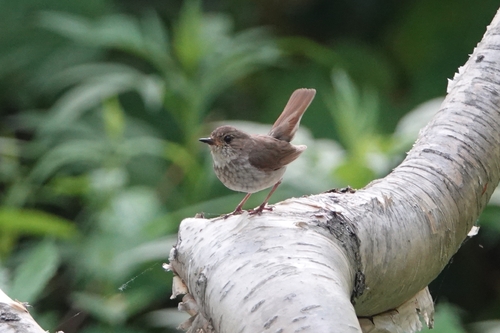
Rufous-tailed Robin (Larvivora sibilans) Rufous-tailed Robin
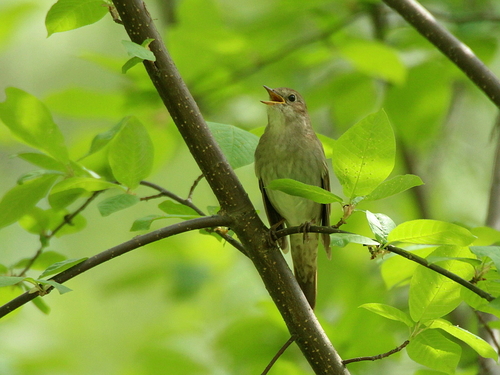
Thrush Nightingale (Luscinia luscinia) Thrush Nightingale

Media

Loading…

In short

The Rufous-tailed Robin and Thrush Nightingale can be distinguished by their tail and plumage patterns. The Rufous-tailed Robin has a distinct rufous tail and more uniform brown upperparts, while the Thrush Nightingale has a less contrasting tail and more mottled appearance. Vocalizations differ significantly, with the Thrush Nightingale having a more complex song.

Identification tips

Look for the rufous tail on the Rufous-tailed Robin, especially when perched or flicking its tail. Note the more mottled appearance and paler throat of the Thrush Nightingale. Listen for the complex song of the Thrush Nightingale, which is a key differentiator in the field.

Size

Both species are similar in size, though the Thrush Nightingale is generally slightly larger.

Plumage

The Rufous-tailed Robin has a rufous tail and more uniform brown upperparts, while the Thrush Nightingale has a less contrasting tail and a more mottled appearance with a paler throat.

Behaviour

Both species are secretive and often found low in dense vegetation, but the Rufous-tailed Robin may be more likely to flick its tail.

Habitat

Both species prefer dense undergrowth in forests or thickets, but the Rufous-tailed Robin is more often found in coniferous or mixed forests, while the Thrush Nightingale favors deciduous woodlands.

Voice

The Thrush Nightingale has a more complex and varied song compared to the simpler, less musical calls of the Rufous-tailed Robin.

Submit a better description

Use the same sections as the comparison. Your text is published immediately.

The Rufous-tailed Robin and Thrush Nightingale can be distinguished by their tail and plumage patterns. The Rufous-tailed Robin has a distinct rufous tail and more uniform brown upperparts, while the Thrush Nightingale has a less contrasting tail and more mottled appearance. Vocalizations differ significantly, with the Thrush Nightingale having a more complex song.

Look for the rufous tail on the Rufous-tailed Robin, especially when perched or flicking its tail. Note the more mottled appearance and paler throat of the Thrush Nightingale. Listen for the complex song of the Thrush Nightingale, which is a key differentiator in the field.

Both species are similar in size, though the Thrush Nightingale is generally slightly larger.

The Rufous-tailed Robin has a rufous tail and more uniform brown upperparts, while the Thrush Nightingale has a less contrasting tail and a more mottled appearance with a paler throat.

Both species are secretive and often found low in dense vegetation, but the Rufous-tailed Robin may be more likely to flick its tail.

Both species prefer dense undergrowth in forests or thickets, but the Rufous-tailed Robin is more often found in coniferous or mixed forests, while the Thrush Nightingale favors deciduous woodlands.

The Thrush Nightingale has a more complex and varied song compared to the simpler, less musical calls of the Rufous-tailed Robin.

Discard your changes?

You have unsaved edits. If you leave now, those changes will be lost.

Rufous-tailed Robin · Thrush Nightingale · My Tricky Birds