Birdr

Rufous Turtle Dove vs Black-bellied Sandgrouse

Streptopelia orientalis versus Pterocles orientalis

Play a quiz with Rufous Turtle Dove and Black-bellied Sandgrouse
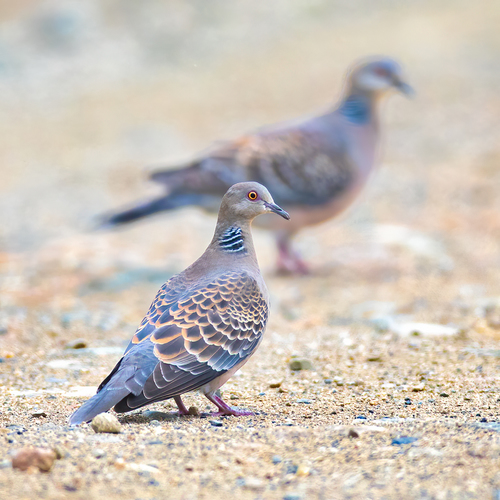
Rufous Turtle Dove (Streptopelia orientalis) Rufous Turtle Dove
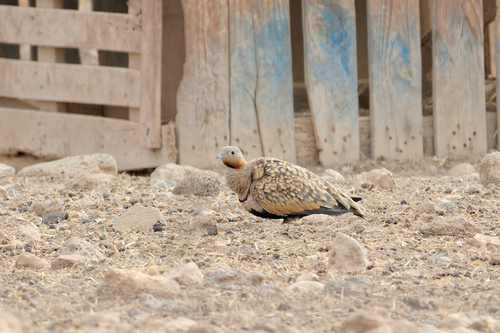
Black-bellied Sandgrouse (Pterocles orientalis) Black-bellied Sandgrouse

Media

Loading…

In short

The Rufous Turtle Dove and Black-bellied Sandgrouse are distinctly different in structure and habitat preferences. The Turtle Dove is a pigeon with a more compact body and rounded wings, while the Sandgrouse has a more elongated body and pointed wings. They are unlikely to be confused in the field due to these differences.

Identification tips

  1. Check the body shape and wing structure: Turtle Doves are more compact with rounded wings, while Sandgrouse are elongated with pointed wings. 2. Look for the black belly: Only the Sandgrouse has this feature. 3. Observe the habitat: Turtle Doves are in wooded areas; Sandgrouse prefer open, arid regions. 4. Listen for calls: Turtle Doves coo softly, Sandgrouse have a harsher call.

Size

The Rufous Turtle Dove is generally smaller and more compact compared to the larger and more elongated Black-bellied Sandgrouse.

Plumage

The Rufous Turtle Dove has a rufous-brown plumage with a distinctive black-and-white striped patch on the neck. In contrast, the Black-bellied Sandgrouse has a more sandy or buff coloration with a black belly, which is a key distinguishing feature.

Behaviour

Rufous Turtle Doves are often seen perched in trees or on the ground foraging, while Black-bellied Sandgrouse are more likely to be seen in flight or on open ground, often in flocks.

Habitat

Rufous Turtle Doves prefer wooded or semi-open areas, whereas Black-bellied Sandgrouse are typically found in arid, open landscapes such as deserts and steppes.

Voice

The Rufous Turtle Dove has a soft, cooing call, while the Black-bellied Sandgrouse produces a more distinctive, harsh call, often heard in flight.

Submit a better description

Use the same sections as the comparison. Your text is published immediately.

The Rufous Turtle Dove and Black-bellied Sandgrouse are distinctly different in structure and habitat preferences. The Turtle Dove is a pigeon with a more compact body and rounded wings, while the Sandgrouse has a more elongated body and pointed wings. They are unlikely to be confused in the field due to these differences.

  1. Check the body shape and wing structure: Turtle Doves are more compact with rounded wings, while Sandgrouse are elongated with pointed wings. 2. Look for the black belly: Only the Sandgrouse has this feature. 3. Observe the habitat: Turtle Doves are in wooded areas; Sandgrouse prefer open, arid regions. 4. Listen for calls: Turtle Doves coo softly, Sandgrouse have a harsher call.

The Rufous Turtle Dove is generally smaller and more compact compared to the larger and more elongated Black-bellied Sandgrouse.

The Rufous Turtle Dove has a rufous-brown plumage with a distinctive black-and-white striped patch on the neck. In contrast, the Black-bellied Sandgrouse has a more sandy or buff coloration with a black belly, which is a key distinguishing feature.

Rufous Turtle Doves are often seen perched in trees or on the ground foraging, while Black-bellied Sandgrouse are more likely to be seen in flight or on open ground, often in flocks.

Rufous Turtle Doves prefer wooded or semi-open areas, whereas Black-bellied Sandgrouse are typically found in arid, open landscapes such as deserts and steppes.

The Rufous Turtle Dove has a soft, cooing call, while the Black-bellied Sandgrouse produces a more distinctive, harsh call, often heard in flight.

Discard your changes?

You have unsaved edits. If you leave now, those changes will be lost.

Rufous Turtle Dove · Black-bellied Sandgrouse · My Tricky Birds