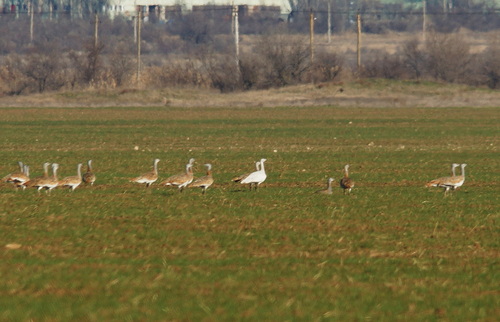
Rufous Turtle Dove vs Great Bustard
Streptopelia orientalis versus Otis tarda
Play a quiz with Rufous Turtle Dove and Great Bustard
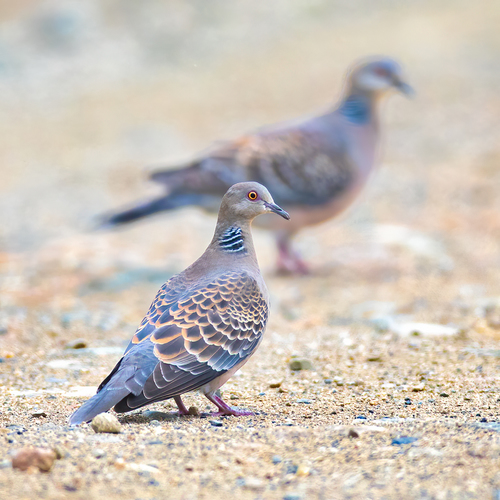
Rufous Turtle Dove
Great Bustard
In short
The Rufous Turtle Dove and Great Bustard are vastly different in appearance and size, making them relatively easy to distinguish. The Rufous Turtle Dove is a medium-sized dove with a rufous coloration, while the Great Bustard is a much larger bird with a more robust build and distinctive plumage patterns.
Identification tips
- Size: Note the significant size difference; Great Bustards are much larger. 2. Plumage: Look for the rufous coloration and neck patch on the dove versus the bold patterns on the bustard. 3. Habitat: Consider the environment; doves are more likely in wooded areas, bustards in open fields. 4. Behavior: Observe group size and behavior; bustards often display in open areas, while doves may be perched or foraging on the ground.
Size
The Rufous Turtle Dove is significantly smaller, typically around 30 cm in length, compared to the Great Bustard, which can reach up to 100 cm.
Plumage
The Rufous Turtle Dove has a rufous-brown plumage with a distinctive black and white patch on the neck. In contrast, the Great Bustard has a striking pattern with a mix of brown, white, and black, and males have a noticeable white neck and chest during the breeding season.
Behaviour
Rufous Turtle Doves are typically seen in pairs or small groups and are often perched in trees or on the ground. Great Bustards are more often found in open fields and display elaborate courtship behaviors, especially during the breeding season.
Habitat
Rufous Turtle Doves are often found in wooded areas, gardens, and agricultural lands, while Great Bustards prefer open grasslands and steppe habitats.
Voice
The Rufous Turtle Dove has a soft, cooing call, whereas the Great Bustard is generally silent but may produce low grunts during courtship displays.