Birdr

Rufous-winged Antshrike vs Bolivian Slaty-Antshrike

Thamnophilus torquatus versus Thamnophilus sticturus

Play a quiz with Rufous-winged Antshrike and Bolivian Slaty-Antshrike
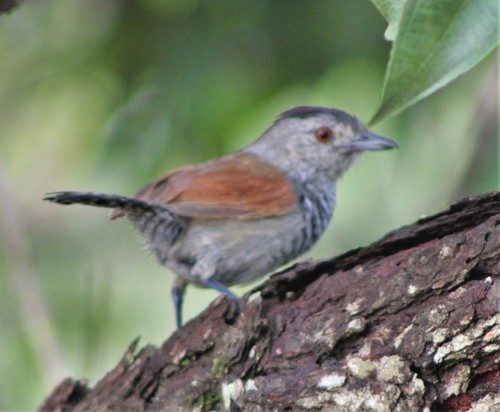
Rufous-winged Antshrike (Thamnophilus torquatus) Rufous-winged Antshrike
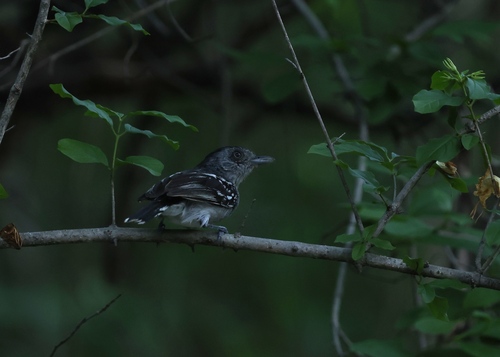
Bolivian Slaty-Antshrike (Thamnophilus sticturus) Bolivian Slaty-Antshrike

Media

Loading…

In short

The Rufous-winged Antshrike and the Bolivian Slaty-Antshrike are both members of the Thamnophilus genus, making them structurally similar. The most reliable field mark is the rufous wing patch in the Rufous-winged Antshrike, which is absent in the Bolivian Slaty-Antshrike. Both species have similar body shapes and sizes, but differ in plumage coloration and habitat preferences.

Identification tips

  1. Look for the rufous wing patch in the Rufous-winged Antshrike. 2. Observe habitat: drier areas suggest Rufous-winged, while humid forests suggest Bolivian Slaty. 3. Note any vocalizations, though differences may be subtle. 4. Consider overall plumage tone: Rufous-winged has more contrast with rufous and dark patterns.

Size

Both species are similar in size, typical of Thamnophilus antshrikes, with no significant differences in overall body structure.

Plumage

The Rufous-winged Antshrike has a distinctive rufous patch on the wings, while the Bolivian Slaty-Antshrike lacks this feature and is more uniformly slaty-gray. Both have dark plumage, but the Rufous-winged Antshrike has more contrasting patterns.

Behaviour

Both species exhibit typical antshrike behavior, such as moving through dense undergrowth and foraging for insects. No significant behavioral differences are noted.

Habitat

The Rufous-winged Antshrike is often found in drier forests and scrub, while the Bolivian Slaty-Antshrike prefers humid forest environments. These habitat preferences can aid in differentiation.

Voice

Vocalizations are similar, as both species belong to the same genus, but specific differences in song patterns may exist. Observers should note any distinct calls when possible.

Submit a better description

Use the same sections as the comparison. Your text is published immediately.

The Rufous-winged Antshrike and the Bolivian Slaty-Antshrike are both members of the Thamnophilus genus, making them structurally similar. The most reliable field mark is the rufous wing patch in the Rufous-winged Antshrike, which is absent in the Bolivian Slaty-Antshrike. Both species have similar body shapes and sizes, but differ in plumage coloration and habitat preferences.

  1. Look for the rufous wing patch in the Rufous-winged Antshrike. 2. Observe habitat: drier areas suggest Rufous-winged, while humid forests suggest Bolivian Slaty. 3. Note any vocalizations, though differences may be subtle. 4. Consider overall plumage tone: Rufous-winged has more contrast with rufous and dark patterns.

Both species are similar in size, typical of Thamnophilus antshrikes, with no significant differences in overall body structure.

The Rufous-winged Antshrike has a distinctive rufous patch on the wings, while the Bolivian Slaty-Antshrike lacks this feature and is more uniformly slaty-gray. Both have dark plumage, but the Rufous-winged Antshrike has more contrasting patterns.

Both species exhibit typical antshrike behavior, such as moving through dense undergrowth and foraging for insects. No significant behavioral differences are noted.

The Rufous-winged Antshrike is often found in drier forests and scrub, while the Bolivian Slaty-Antshrike prefers humid forest environments. These habitat preferences can aid in differentiation.

Vocalizations are similar, as both species belong to the same genus, but specific differences in song patterns may exist. Observers should note any distinct calls when possible.

Discard your changes?

You have unsaved edits. If you leave now, those changes will be lost.

Rufous-winged Antshrike · Bolivian Slaty-Antshrike · My Tricky Birds