Birdr

Rufous Woodpecker vs Bamboo Woodpecker

Micropternus brachyurus versus Gecinulus viridis

Play a quiz with Rufous Woodpecker and Bamboo Woodpecker
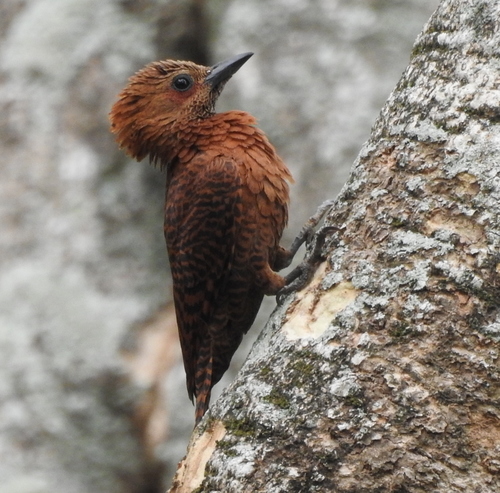
Rufous Woodpecker (Micropternus brachyurus) Rufous Woodpecker
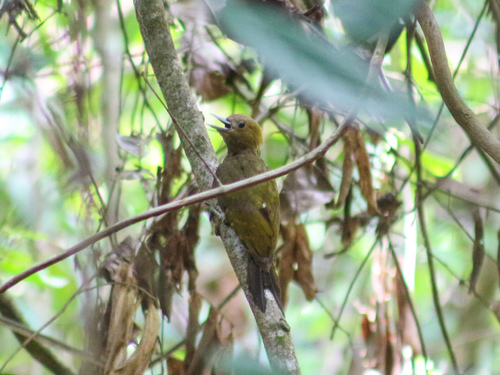
Bamboo Woodpecker (Gecinulus viridis) Bamboo Woodpecker

Media

Loading…

In short

The Rufous Woodpecker (Micropternus brachyurus) and Bamboo Woodpecker (Gecinulus viridis) can be confused due to their similar size and habitat preferences. The most reliable field mark is the plumage coloration: Rufous Woodpecker is uniformly rufous-brown, while Bamboo Woodpecker has a more olive-green tone. Observing their behavior and habitat preferences can also aid in identification.

Identification tips

  1. Look for the plumage color: Rufous Woodpecker is rufous-brown, Bamboo Woodpecker is olive-green. 2. Consider the habitat: Bamboo Woodpecker is often in bamboo thickets. 3. Observe behavior: both species drum, but Bamboo Woodpecker may be more active in bamboo. 4. Use vocalizations cautiously as they are not distinctly different.

Size

Both species are similar in size, typical of medium-sized woodpeckers.

Plumage

Rufous Woodpecker is predominantly rufous-brown, lacking the greenish tones of the Bamboo Woodpecker, which has a more olive-green plumage. This color difference is the most reliable distinguishing feature.

Behaviour

Both species exhibit typical woodpecker behavior such as drumming and foraging on tree trunks, but Bamboo Woodpecker is more closely associated with bamboo thickets.

Habitat

Rufous Woodpecker is found in a variety of forested habitats, including deciduous and evergreen forests, while Bamboo Woodpecker is more specialized, often found in bamboo forests or areas with dense bamboo growth.

Voice

Vocalizations are not the most reliable for differentiation as both species have typical woodpecker calls. However, if heard, note that Rufous Woodpecker's calls are generally softer.

Submit a better description

Use the same sections as the comparison. Your text is published immediately.

The Rufous Woodpecker (Micropternus brachyurus) and Bamboo Woodpecker (Gecinulus viridis) can be confused due to their similar size and habitat preferences. The most reliable field mark is the plumage coloration: Rufous Woodpecker is uniformly rufous-brown, while Bamboo Woodpecker has a more olive-green tone. Observing their behavior and habitat preferences can also aid in identification.

  1. Look for the plumage color: Rufous Woodpecker is rufous-brown, Bamboo Woodpecker is olive-green. 2. Consider the habitat: Bamboo Woodpecker is often in bamboo thickets. 3. Observe behavior: both species drum, but Bamboo Woodpecker may be more active in bamboo. 4. Use vocalizations cautiously as they are not distinctly different.

Both species are similar in size, typical of medium-sized woodpeckers.

Rufous Woodpecker is predominantly rufous-brown, lacking the greenish tones of the Bamboo Woodpecker, which has a more olive-green plumage. This color difference is the most reliable distinguishing feature.

Both species exhibit typical woodpecker behavior such as drumming and foraging on tree trunks, but Bamboo Woodpecker is more closely associated with bamboo thickets.

Rufous Woodpecker is found in a variety of forested habitats, including deciduous and evergreen forests, while Bamboo Woodpecker is more specialized, often found in bamboo forests or areas with dense bamboo growth.

Vocalizations are not the most reliable for differentiation as both species have typical woodpecker calls. However, if heard, note that Rufous Woodpecker's calls are generally softer.

Discard your changes?

You have unsaved edits. If you leave now, those changes will be lost.

Rufous Woodpecker · Bamboo Woodpecker · My Tricky Birds