Birdr

Rusty-backed Antwren vs Streak-capped Antwren

Formicivora rufa versus Terenura maculata

Play a quiz with Rusty-backed Antwren and Streak-capped Antwren

Rusty-backed Antwren (Formicivora rufa) Rusty-backed Antwren
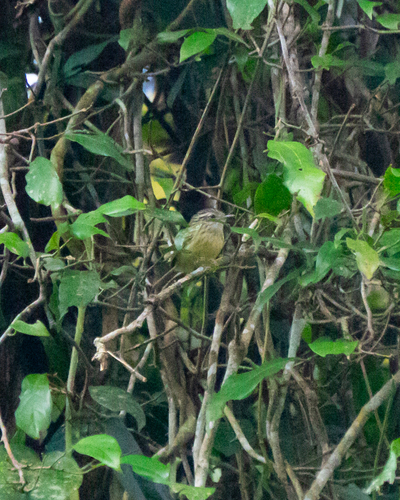
Streak-capped Antwren (Terenura maculata) Streak-capped Antwren

Media

Loading…

In short

The Rusty-backed Antwren is best identified by its rufescent upperparts and black throat bordered in white in males, while the Streak-capped Antwren has a distinctive streaked cap and is found in the canopy. Both species belong to the antbird family but differ significantly in habitat preference and foraging behavior.

Identification tips

  1. Look for the rufescent upperparts in Rusty-backed Antwren. 2. Check for the streaked cap in Streak-capped Antwren. 3. Observe habitat: Rusty-backed prefers open habitats, while Streak-capped is in forest canopy. 4. Note behavior: Rusty-backed stays in undergrowth; Streak-capped joins mixed flocks in canopy.

Size

Both species are small antwrens, but size is not a reliable differentiator in the field.

Plumage

The Rusty-backed Antwren has more rufescent upperparts, with males showing a black throat bordered in white and females having white streaked with black below. The Streak-capped Antwren is noted for its streaked cap, which is a key distinguishing feature.

Behaviour

Rusty-backed Antwrens forage actively in the undergrowth, while Streak-capped Antwrens are typically found in the midstory and canopy, often joining mixed-species flocks.

Habitat

Rusty-backed Antwrens inhabit cerrado and open habitats, including savanna patches in central Brazil and Andean foothills. In contrast, Streak-capped Antwrens are found in the evergreen forests of the Atlantic Forest region.

Submit a better description

Use the same sections as the comparison. Your text is published immediately.

The Rusty-backed Antwren is best identified by its rufescent upperparts and black throat bordered in white in males, while the Streak-capped Antwren has a distinctive streaked cap and is found in the canopy. Both species belong to the antbird family but differ significantly in habitat preference and foraging behavior.

  1. Look for the rufescent upperparts in Rusty-backed Antwren. 2. Check for the streaked cap in Streak-capped Antwren. 3. Observe habitat: Rusty-backed prefers open habitats, while Streak-capped is in forest canopy. 4. Note behavior: Rusty-backed stays in undergrowth; Streak-capped joins mixed flocks in canopy.

Both species are small antwrens, but size is not a reliable differentiator in the field.

The Rusty-backed Antwren has more rufescent upperparts, with males showing a black throat bordered in white and females having white streaked with black below. The Streak-capped Antwren is noted for its streaked cap, which is a key distinguishing feature.

Rusty-backed Antwrens forage actively in the undergrowth, while Streak-capped Antwrens are typically found in the midstory and canopy, often joining mixed-species flocks.

Rusty-backed Antwrens inhabit cerrado and open habitats, including savanna patches in central Brazil and Andean foothills. In contrast, Streak-capped Antwrens are found in the evergreen forests of the Atlantic Forest region.

Discard your changes?

You have unsaved edits. If you leave now, those changes will be lost.

Rusty-backed Antwren · Streak-capped Antwren · My Tricky Birds