Birdr

Rusty-winged Barbtail vs Sharp-tailed Streamcreeper

Premnornis guttuliger versus Lochmias nematura

Play a quiz with Rusty-winged Barbtail and Sharp-tailed Streamcreeper
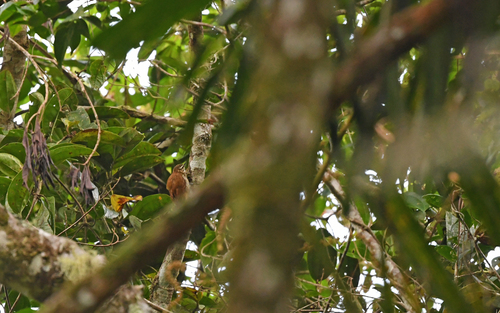
Rusty-winged Barbtail (Premnornis guttuliger) Rusty-winged Barbtail
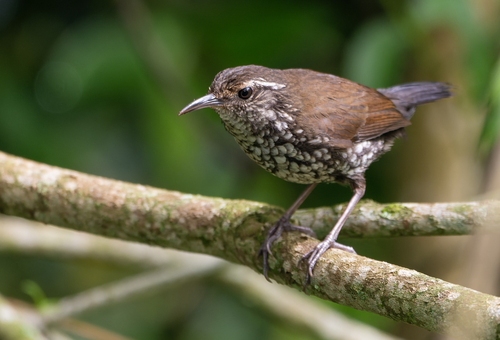
Sharp-tailed Streamcreeper (Lochmias nematura) Sharp-tailed Streamcreeper

Media

Loading…

In short

The Rusty-winged Barbtail and Sharp-tailed Streamcreeper are both small, terrestrial ovenbirds, but they can be distinguished by their tail structure and habitat preferences. The Barbtail has a more uniform plumage with rusty wings, while the Streamcreeper is darker with a distinctive pale supercilium.

Identification tips

  1. Look for the rusty wings on the Rusty-winged Barbtail. 2. Note the pale supercilium and white scalloping on the underparts of the Sharp-tailed Streamcreeper. 3. Observe habitat: Barbtails are more forest-dwelling, while Streamcreepers are often near streams. 4. Consider behavior: Streamcreepers are more likely to be seen probing in leaf litter.

Size

Both species are similar in size, but the Sharp-tailed Streamcreeper appears slightly bulkier due to its stocky build.

Plumage

The Rusty-winged Barbtail features rusty-colored wings and a more uniform body plumage. In contrast, the Sharp-tailed Streamcreeper is darker overall with white scalloping on the underparts and a pale supercilium, especially in the nominate subspecies.

Behaviour

Both species are terrestrial and forage on the ground, but the Sharp-tailed Streamcreeper is more adapted to probing moss and leaf litter.

Habitat

The Rusty-winged Barbtail is typically found in montane forests, while the Sharp-tailed Streamcreeper prefers upland areas near streams, often in the Andes and eastern Brazil.

Voice

Vocalizations are not well-documented for these species, and differences are uncertain.

Submit a better description

Use the same sections as the comparison. Your text is published immediately.

The Rusty-winged Barbtail and Sharp-tailed Streamcreeper are both small, terrestrial ovenbirds, but they can be distinguished by their tail structure and habitat preferences. The Barbtail has a more uniform plumage with rusty wings, while the Streamcreeper is darker with a distinctive pale supercilium.

  1. Look for the rusty wings on the Rusty-winged Barbtail. 2. Note the pale supercilium and white scalloping on the underparts of the Sharp-tailed Streamcreeper. 3. Observe habitat: Barbtails are more forest-dwelling, while Streamcreepers are often near streams. 4. Consider behavior: Streamcreepers are more likely to be seen probing in leaf litter.

Both species are similar in size, but the Sharp-tailed Streamcreeper appears slightly bulkier due to its stocky build.

The Rusty-winged Barbtail features rusty-colored wings and a more uniform body plumage. In contrast, the Sharp-tailed Streamcreeper is darker overall with white scalloping on the underparts and a pale supercilium, especially in the nominate subspecies.

Both species are terrestrial and forage on the ground, but the Sharp-tailed Streamcreeper is more adapted to probing moss and leaf litter.

The Rusty-winged Barbtail is typically found in montane forests, while the Sharp-tailed Streamcreeper prefers upland areas near streams, often in the Andes and eastern Brazil.

Vocalizations are not well-documented for these species, and differences are uncertain.

Discard your changes?

You have unsaved edits. If you leave now, those changes will be lost.

Rusty-winged Barbtail · Sharp-tailed Streamcreeper · My Tricky Birds