Birdr

Ryukyu Flycatcher vs Mugimaki Flycatcher

Ficedula owstoni versus Ficedula mugimaki

Play a quiz with Ryukyu Flycatcher and Mugimaki Flycatcher
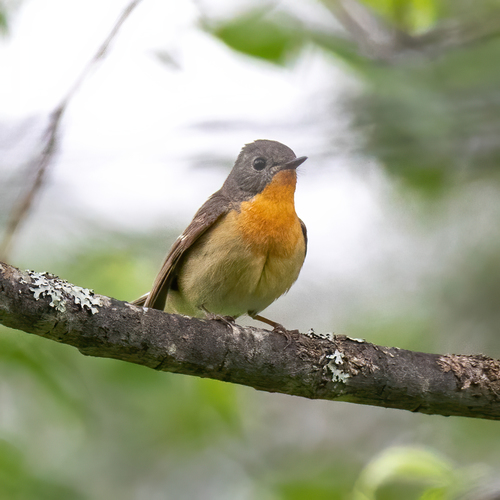
Ryukyu Flycatcher (Ficedula owstoni) Ryukyu Flycatcher
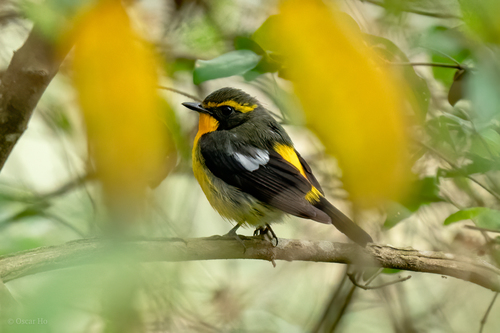
Mugimaki Flycatcher (Ficedula mugimaki) Mugimaki Flycatcher

Media

Loading…

In short

The Ryukyu Flycatcher and Mugimaki Flycatcher are both small Old World flycatchers, but they can be distinguished by differences in plumage and behavior. The Ryukyu Flycatcher typically exhibits more subdued coloration compared to the striking black and orange of the male Mugimaki Flycatcher. Observing their behavior and preferred habitats can also aid in identification.

Identification tips

  1. Look for the bold black and orange plumage of the male Mugimaki Flycatcher. 2. Note the white wing patch in Mugimaki Flycatcher, especially in females and juveniles. 3. Consider the habitat: Ryukyu Flycatcher in subtropical forests vs. Mugimaki in open woodlands. 4. Observe behavior: active sallying in Mugimaki Flycatcher. 5. Use vocalizations cautiously, as they are not always distinctive.

Size

Both species are similar in size, typical of small flycatchers.

Plumage

Male Mugimaki Flycatchers are distinctive with their bold black upperparts and bright orange throat and breast, while the Ryukyu Flycatcher tends to have more muted tones with olive-brown upperparts and yellowish underparts. Females and juveniles of both species can be more challenging to differentiate, but the Mugimaki Flycatcher often shows a more pronounced white wing patch.

Behaviour

Mugimaki Flycatchers are often seen actively sallying for insects from perches, while Ryukyu Flycatchers may exhibit more subdued foraging behavior.

Habitat

Ryukyu Flycatchers are typically found in subtropical forests of the Ryukyu Islands, whereas Mugimaki Flycatchers prefer open woodlands and forest edges during migration and breeding.

Voice

Vocalizations are not well-documented for Ryukyu Flycatcher, while Mugimaki Flycatcher has a series of high-pitched calls, but these are not always reliable for identification in the field.

Submit a better description

Use the same sections as the comparison. Your text is published immediately.

The Ryukyu Flycatcher and Mugimaki Flycatcher are both small Old World flycatchers, but they can be distinguished by differences in plumage and behavior. The Ryukyu Flycatcher typically exhibits more subdued coloration compared to the striking black and orange of the male Mugimaki Flycatcher. Observing their behavior and preferred habitats can also aid in identification.

  1. Look for the bold black and orange plumage of the male Mugimaki Flycatcher. 2. Note the white wing patch in Mugimaki Flycatcher, especially in females and juveniles. 3. Consider the habitat: Ryukyu Flycatcher in subtropical forests vs. Mugimaki in open woodlands. 4. Observe behavior: active sallying in Mugimaki Flycatcher. 5. Use vocalizations cautiously, as they are not always distinctive.

Both species are similar in size, typical of small flycatchers.

Male Mugimaki Flycatchers are distinctive with their bold black upperparts and bright orange throat and breast, while the Ryukyu Flycatcher tends to have more muted tones with olive-brown upperparts and yellowish underparts. Females and juveniles of both species can be more challenging to differentiate, but the Mugimaki Flycatcher often shows a more pronounced white wing patch.

Mugimaki Flycatchers are often seen actively sallying for insects from perches, while Ryukyu Flycatchers may exhibit more subdued foraging behavior.

Ryukyu Flycatchers are typically found in subtropical forests of the Ryukyu Islands, whereas Mugimaki Flycatchers prefer open woodlands and forest edges during migration and breeding.

Vocalizations are not well-documented for Ryukyu Flycatcher, while Mugimaki Flycatcher has a series of high-pitched calls, but these are not always reliable for identification in the field.

Discard your changes?

You have unsaved edits. If you leave now, those changes will be lost.

Ryukyu Flycatcher · Mugimaki Flycatcher · My Tricky Birds