Sabine's Gull vs Bonaparte's Gull
Xema sabini versus Chroicocephalus philadelphia
Play a quiz with Sabine's Gull and Bonaparte's Gull
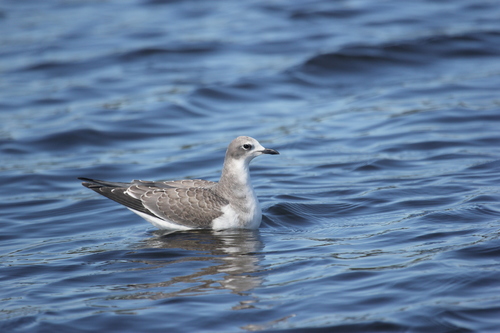
Sabine's Gull
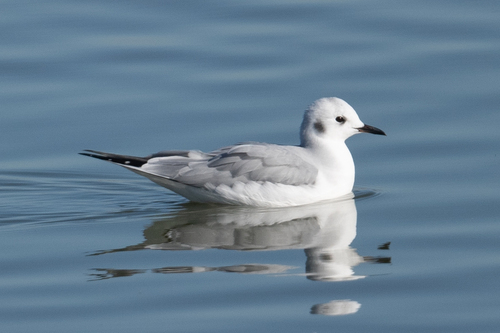
Bonaparte's Gull
In short
Sabine's Gull and Bonaparte's Gull are both small gulls with distinct features. Sabine's Gull is notable for its black bill with a yellow tip and a unique notched tail, while Bonaparte's Gull is recognized by its dove-like appearance and tern-like flight. Both species can be seen in migration, but their habitats and behaviors differ significantly.
Identification tips
Look for Sabine's Gull's black bill with a yellow tip and notched tail. Bonaparte's Gull can be identified by its black hood in breeding plumage and its habit of nesting in trees. Observe their flight patterns: Sabine's Gull has a more direct flight, while Bonaparte's Gull exhibits a buoyant, tern-like flight.
Size
Both species are among the smaller gulls, but Sabine's Gull is slightly more robust compared to the more delicate Bonaparte's Gull.
Plumage
Sabine's Gull has a distinctive black bill with a yellow tip and a notched tail, which are key identifiers. Bonaparte's Gull, in breeding plumage, displays a black hood, while in non-breeding plumage, it has a white head with a dark ear spot.
Behaviour
Sabine's Gull exhibits behaviors more akin to shorebirds and terns, such as distraction displays and feeding methods. Bonaparte's Gull is known for its graceful, tern-like flight and unique tree-nesting habits.
Habitat
Sabine's Gull is often found in coastal and pelagic environments, whereas Bonaparte's Gull nests in trees in boreal forests and frequents inland and coastal waters during migration and winter.
Voice
Sabine's Gull has calls more similar to terns, while Bonaparte's Gull is known for its lilting calls, especially during the breeding season.