Sabine's Gull vs Saunders's Gull
Xema sabini versus Saundersilarus saundersi
Play a quiz with Sabine's Gull and Saunders's Gull
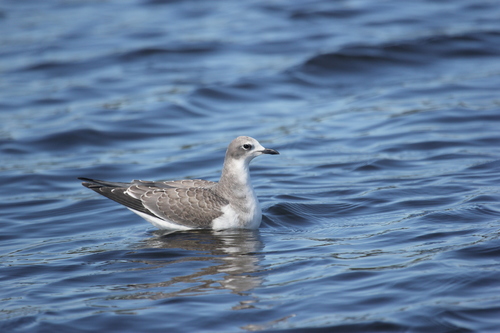
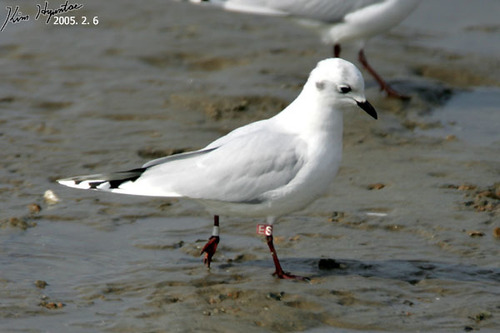
Sabine's Gull
Saunders's Gull
In short
Sabine's Gull and Saunders's Gull can be distinguished primarily by their bill and tail features. Sabine's Gull has a distinctive black bill with a yellow tip and a notched tail, while Saunders's Gull lacks these features. Both species belong to the same family but differ in behavior and habitat preferences.
Identification tips
1. Bill: Look for the black bill with a yellow tip on Sabine's Gull. 2. Tail: Check for the notched tail in Sabine's Gull. 3. Plumage: Note the black hood in Sabine's Gull during breeding season. 4. Behavior: Observe feeding methods; Sabine's Gull may feed on mudflats like shorebirds. 5. Habitat: Consider the location; Sabine's Gull is more likely in open ocean contexts, while Saunders's Gull prefers coastal areas.
Size
Both species are small gulls, but Sabine's Gull is slightly more delicate in appearance.
Plumage
Sabine's Gull features a striking black hood in breeding plumage and a notched tail. Saunders's Gull has a more uniform plumage without the distinctive hood or tail notch.
Behaviour
Sabine's Gull exhibits behaviors similar to shorebirds and terns, such as distraction displays and feeding on mudflats. Saunders's Gull's behavior is less documented but generally aligns with typical gull behavior.
Habitat
Sabine's Gull is often found in Arctic breeding grounds and migrates over open oceans. Saunders's Gull is more coastal, often found in estuaries and mudflats.
Voice
Sabine's Gull has calls more similar to terns, but specific vocalization details for Saunders's Gull are less documented.