Birdr

Sabine's Gull vs Slender-billed Gull

Xema sabini versus Chroicocephalus genei

Play a quiz with Sabine's Gull and Slender-billed Gull
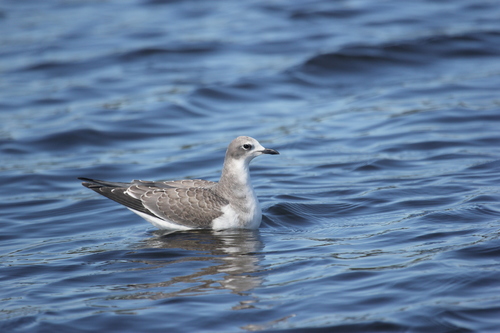
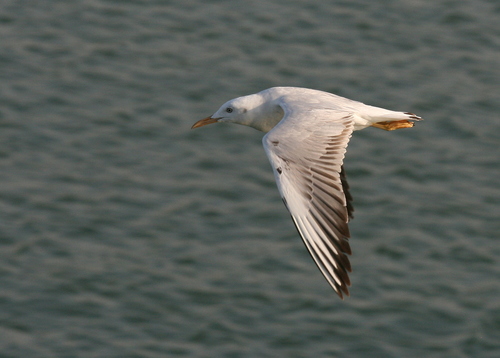
Sabine's Gull (Xema sabini) Sabine's Gull
Slender-billed Gull (Chroicocephalus genei) Slender-billed Gull

Media

Loading…

In short

Sabine's Gull and Slender-billed Gull can be distinguished primarily by their bill and tail features. Sabine's Gull has a black bill with a yellow tip and a notched tail, while Slender-billed Gull has a long, slender bill and a rounded tail.

Identification tips

Size

Both species are similar in size, typical of medium-sized gulls, but Sabine's Gull may appear slightly bulkier due to its more compact structure.

Plumage

Sabine's Gull in breeding plumage has a distinctive black hood, whereas the Slender-billed Gull has a white head with a slight pinkish hue during breeding season. Sabine's Gull also shows a unique wing pattern with a bold black, white, and gray triangle on the upperwing.

Behaviour

Sabine's Gull exhibits behaviors more akin to shorebirds and terns, such as distraction displays and feeding on mudflats. Slender-billed Gull behaves more like typical gulls, often seen in coastal and inland waters.

Habitat

Sabine's Gull is often found in Arctic breeding grounds and migrates to open ocean waters. Slender-billed Gull prefers coastal lagoons, estuaries, and inland lakes in warmer climates.

Voice

Sabine's Gull has calls more similar to terns, while Slender-billed Gull has typical gull-like calls. Specific vocal differences are not well-documented.

Submit a better description

Use the same sections as the comparison. Your text is published immediately.

Sabine's Gull and Slender-billed Gull can be distinguished primarily by their bill and tail features. Sabine's Gull has a black bill with a yellow tip and a notched tail, while Slender-billed Gull has a long, slender bill and a rounded tail.

  • Look for the black bill with a yellow tip and notched tail in Sabine's Gull.
  • Note the long, slender bill and rounded tail in Slender-billed Gull.
  • Observe wing patterns: Sabine's Gull has a bold black, white, and gray triangle on the upperwing.
  • Consider habitat: Sabine's Gull is more likely in open ocean waters, while Slender-billed Gull is found in coastal and inland waters.
  • Listen for calls: Sabine's Gull may sound more like a tern, whereas Slender-billed Gull has typical gull calls.

Both species are similar in size, typical of medium-sized gulls, but Sabine's Gull may appear slightly bulkier due to its more compact structure.

Sabine's Gull in breeding plumage has a distinctive black hood, whereas the Slender-billed Gull has a white head with a slight pinkish hue during breeding season. Sabine's Gull also shows a unique wing pattern with a bold black, white, and gray triangle on the upperwing.

Sabine's Gull exhibits behaviors more akin to shorebirds and terns, such as distraction displays and feeding on mudflats. Slender-billed Gull behaves more like typical gulls, often seen in coastal and inland waters.

Sabine's Gull is often found in Arctic breeding grounds and migrates to open ocean waters. Slender-billed Gull prefers coastal lagoons, estuaries, and inland lakes in warmer climates.

Sabine's Gull has calls more similar to terns, while Slender-billed Gull has typical gull-like calls. Specific vocal differences are not well-documented.

Discard your changes?

You have unsaved edits. If you leave now, those changes will be lost.

Sabine's Gull · Slender-billed Gull · My Tricky Birds