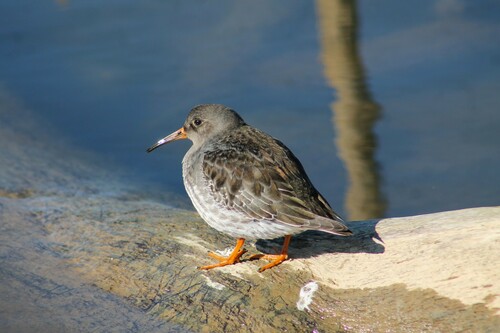
Sanderling vs Purple Sandpiper
Calidris alba versus Calidris maritima
Play a quiz with Sanderling and Purple Sandpiper
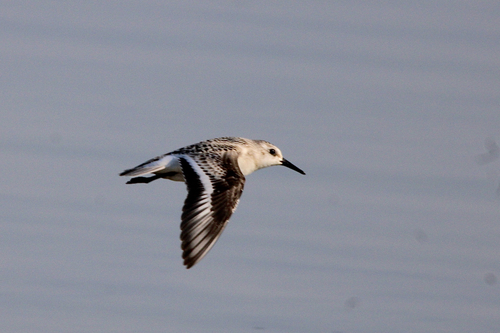
Sanderling
Purple Sandpiper
In short
The Sanderling and Purple Sandpiper are both small shorebirds, but they can be distinguished by habitat and plumage. Sanderlings are typically found on sandy beaches, while Purple Sandpipers prefer rocky coastlines. In winter, Sanderlings are pale and ghostly, contrasting with the darker, slate-colored Purple Sandpipers.
Identification tips
1. Habitat: Look for Sanderlings on sandy beaches and Purple Sandpipers on rocky shores. 2. Plumage in Winter: Sanderlings are pale gray to white, while Purple Sandpipers are darker with a slate color. 3. Behavior: Sanderlings are active, running with waves; Purple Sandpipers are more static and approachable. 4. Season: Consider the time of year, as plumage changes with seasons.
Size
Both species are similar in size, but the Sanderling is slightly smaller and more compact.
Plumage
In winter, Sanderlings are pale gray to white, often appearing almost ghostly, while Purple Sandpipers have slate to charcoal upperparts with a faint purple sheen. In summer, Purple Sandpipers display chestnut and buff highlights, whereas Sanderlings become more mottled but remain paler overall.
Behaviour
Sanderlings are often seen running back and forth with the waves on sandy beaches, while Purple Sandpipers are more sedentary, often seen on rocky shores and are quite approachable.
Habitat
Sanderlings prefer sandy beaches, especially in the intertidal zone. In contrast, Purple Sandpipers are found on rocky coastlines, often in more northern latitudes during winter.
Voice
Both species are relatively quiet away from breeding grounds, with no significant differences noted in their calls during non-breeding seasons.