Birdr

Sanderling vs Rufous Casiornis

Calidris alba versus Casiornis rufus

Play a quiz with Sanderling and Rufous Casiornis

Sanderling (Calidris alba) Sanderling
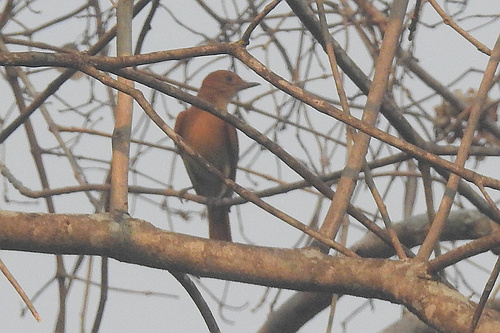
Rufous Casiornis (Casiornis rufus) Rufous Casiornis

Media

Loading…

In short

The Sanderling is a small shorebird often seen on sandy beaches, while the Rufous Casiornis is a passerine with rufous plumage found in wooded habitats. These species differ significantly in both appearance and habitat preference, making them unlikely to be confused in the field.

Identification tips

Look for Sanderlings on sandy beaches, noting their pale plumage and flocking behavior. Rufous Casiornis will be in wooded areas, with distinctive rufous plumage and a more solitary nature. Habitat is a key differentiator.

Size

Sanderlings are small shorebirds, typically around 18-20 cm in length, whereas Rufous Casiornis are slightly larger passerines, measuring about 18-19 cm.

Plumage

Sanderlings have a pale, almost white appearance with darker wingtips, especially in non-breeding plumage. In contrast, Rufous Casiornis are characterized by their overall rufous coloration with slightly darker wings and paler underparts.

Behaviour

Sanderlings are often seen running along beaches in flocks, foraging for food in the intertidal zone. Rufous Casiornis, on the other hand, are more solitary or seen in pairs, typically perched in trees.

Habitat

Sanderlings are found on sandy beaches and intertidal zones during the non-breeding season, while Rufous Casiornis inhabit wooded areas and are not associated with coastal environments.

Voice

Vocalizations are not a primary distinguishing feature between these species, as they occupy different habitats and are unlikely to be heard together.

Submit a better description

Use the same sections as the comparison. Your text is published immediately.

The Sanderling is a small shorebird often seen on sandy beaches, while the Rufous Casiornis is a passerine with rufous plumage found in wooded habitats. These species differ significantly in both appearance and habitat preference, making them unlikely to be confused in the field.

Look for Sanderlings on sandy beaches, noting their pale plumage and flocking behavior. Rufous Casiornis will be in wooded areas, with distinctive rufous plumage and a more solitary nature. Habitat is a key differentiator.

Sanderlings are small shorebirds, typically around 18-20 cm in length, whereas Rufous Casiornis are slightly larger passerines, measuring about 18-19 cm.

Sanderlings have a pale, almost white appearance with darker wingtips, especially in non-breeding plumage. In contrast, Rufous Casiornis are characterized by their overall rufous coloration with slightly darker wings and paler underparts.

Sanderlings are often seen running along beaches in flocks, foraging for food in the intertidal zone. Rufous Casiornis, on the other hand, are more solitary or seen in pairs, typically perched in trees.

Sanderlings are found on sandy beaches and intertidal zones during the non-breeding season, while Rufous Casiornis inhabit wooded areas and are not associated with coastal environments.

Vocalizations are not a primary distinguishing feature between these species, as they occupy different habitats and are unlikely to be heard together.

Discard your changes?

You have unsaved edits. If you leave now, those changes will be lost.

Sanderling · Rufous Casiornis · My Tricky Birds