Birdr

Sao Paulo Bristle-Tyrant vs Bay-ringed Tyrannulet

Pogonotriccus paulista versus Phylloscartes sylviolus

Play a quiz with Sao Paulo Bristle-Tyrant and Bay-ringed Tyrannulet
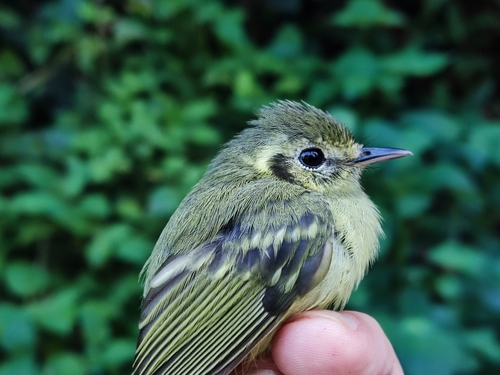
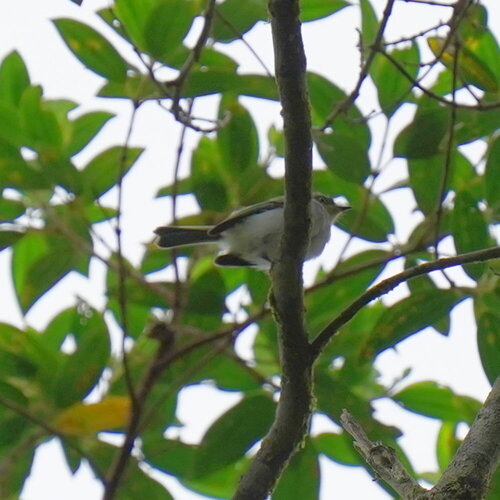
Sao Paulo Bristle-Tyrant (Pogonotriccus paulista) Sao Paulo Bristle-Tyrant
Bay-ringed Tyrannulet (Phylloscartes sylviolus) Bay-ringed Tyrannulet

Media

Loading…

In short

The Sao Paulo Bristle-Tyrant and Bay-ringed Tyrannulet are both small flycatchers from the Tyrannidae family, but they can be distinguished by their structure and plumage details. The Sao Paulo Bristle-Tyrant has a more compact build with a shorter tail, while the Bay-ringed Tyrannulet features a distinctive bay-colored ring around its neck.

Identification tips

  1. Look for the bay-colored neck ring on the Bay-ringed Tyrannulet. 2. Note the shorter tail and more compact build of the Sao Paulo Bristle-Tyrant. 3. Observe behavior: the Bay-ringed Tyrannulet is more active in the canopy. 4. Listen for calls if possible, as vocalizations may aid in distinguishing these species.

Size

Both species are small, but the Sao Paulo Bristle-Tyrant tends to have a more compact appearance with a shorter tail compared to the Bay-ringed Tyrannulet.

Plumage

The Sao Paulo Bristle-Tyrant lacks the distinctive bay-colored ring that gives the Bay-ringed Tyrannulet its name. Instead, it has a more uniform greenish-olive plumage. The Bay-ringed Tyrannulet's bay ring is a key distinguishing feature.

Behaviour

Behavioral details are sparse for the Sao Paulo Bristle-Tyrant, but it likely shares typical Pogonotriccus foraging behavior. The Bay-ringed Tyrannulet is known for its active foraging in the canopy.

Habitat

Both species inhabit forested areas, but specific habitat preferences are not well-documented for the Sao Paulo Bristle-Tyrant. The Bay-ringed Tyrannulet is often found in more open forest edges and secondary growth.

Voice

Vocalizations are not well-documented for the Sao Paulo Bristle-Tyrant, while the Bay-ringed Tyrannulet has a typical Phylloscartes call, which may help in identification if heard.

Submit a better description

Use the same sections as the comparison. Your text is published immediately.

The Sao Paulo Bristle-Tyrant and Bay-ringed Tyrannulet are both small flycatchers from the Tyrannidae family, but they can be distinguished by their structure and plumage details. The Sao Paulo Bristle-Tyrant has a more compact build with a shorter tail, while the Bay-ringed Tyrannulet features a distinctive bay-colored ring around its neck.

  1. Look for the bay-colored neck ring on the Bay-ringed Tyrannulet. 2. Note the shorter tail and more compact build of the Sao Paulo Bristle-Tyrant. 3. Observe behavior: the Bay-ringed Tyrannulet is more active in the canopy. 4. Listen for calls if possible, as vocalizations may aid in distinguishing these species.

Both species are small, but the Sao Paulo Bristle-Tyrant tends to have a more compact appearance with a shorter tail compared to the Bay-ringed Tyrannulet.

The Sao Paulo Bristle-Tyrant lacks the distinctive bay-colored ring that gives the Bay-ringed Tyrannulet its name. Instead, it has a more uniform greenish-olive plumage. The Bay-ringed Tyrannulet's bay ring is a key distinguishing feature.

Behavioral details are sparse for the Sao Paulo Bristle-Tyrant, but it likely shares typical Pogonotriccus foraging behavior. The Bay-ringed Tyrannulet is known for its active foraging in the canopy.

Both species inhabit forested areas, but specific habitat preferences are not well-documented for the Sao Paulo Bristle-Tyrant. The Bay-ringed Tyrannulet is often found in more open forest edges and secondary growth.

Vocalizations are not well-documented for the Sao Paulo Bristle-Tyrant, while the Bay-ringed Tyrannulet has a typical Phylloscartes call, which may help in identification if heard.

Discard your changes?

You have unsaved edits. If you leave now, those changes will be lost.

Sao Paulo Bristle-Tyrant · Bay-ringed Tyrannulet · My Tricky Birds