Birdr

Sao Paulo Bristle-Tyrant vs Mottle-cheeked Tyrannulet

Pogonotriccus paulista versus Phylloscartes ventralis

Play a quiz with Sao Paulo Bristle-Tyrant and Mottle-cheeked Tyrannulet
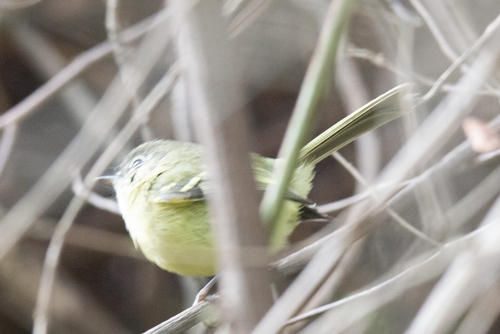
Sao Paulo Bristle-Tyrant (Pogonotriccus paulista) Sao Paulo Bristle-Tyrant
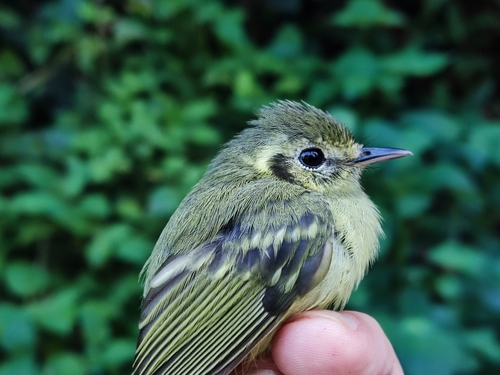
Mottle-cheeked Tyrannulet (Phylloscartes ventralis) Mottle-cheeked Tyrannulet

Media

Loading…

In short

The Sao Paulo Bristle-Tyrant and the Mottle-cheeked Tyrannulet are small flycatchers, but they differ in plumage and behavior. The Mottle-cheeked Tyrannulet is more olive-green with distinctive wingbars and white tertial markings, while the Sao Paulo Bristle-Tyrant's plumage details are less documented. Behaviorally, the Mottle-cheeked Tyrannulet is known for joining mixed-species flocks and active foraging.

Identification tips

  1. Look for the olive-green plumage with wingbars on the Mottle-cheeked Tyrannulet. 2. Observe behavior: the Mottle-cheeked Tyrannulet is more likely to be seen in mixed-species flocks. 3. Note habitat: if in montane forests between 1000–2200 m, it may favor the Mottle-cheeked Tyrannulet.

Size

Both species are small, typical of tyrant flycatchers, with no significant size difference noted.

Plumage

The Mottle-cheeked Tyrannulet is olive-green above with wingbars and white tertial markings, while specific plumage details for the Sao Paulo Bristle-Tyrant are less documented but expected to be typical of the Pogonotriccus genus.

Behaviour

The Mottle-cheeked Tyrannulet actively forages and joins mixed-species flocks, perching horizontally with a slightly cocked tail. The Sao Paulo Bristle-Tyrant's behavior is less documented but expected to be typical of its genus.

Habitat

The Mottle-cheeked Tyrannulet inhabits forest habitats at altitudes of 1000–2200 m. The Sao Paulo Bristle-Tyrant's specific habitat preferences are not well-documented.

Submit a better description

Use the same sections as the comparison. Your text is published immediately.

The Sao Paulo Bristle-Tyrant and the Mottle-cheeked Tyrannulet are small flycatchers, but they differ in plumage and behavior. The Mottle-cheeked Tyrannulet is more olive-green with distinctive wingbars and white tertial markings, while the Sao Paulo Bristle-Tyrant's plumage details are less documented. Behaviorally, the Mottle-cheeked Tyrannulet is known for joining mixed-species flocks and active foraging.

  1. Look for the olive-green plumage with wingbars on the Mottle-cheeked Tyrannulet. 2. Observe behavior: the Mottle-cheeked Tyrannulet is more likely to be seen in mixed-species flocks. 3. Note habitat: if in montane forests between 1000–2200 m, it may favor the Mottle-cheeked Tyrannulet.

Both species are small, typical of tyrant flycatchers, with no significant size difference noted.

The Mottle-cheeked Tyrannulet is olive-green above with wingbars and white tertial markings, while specific plumage details for the Sao Paulo Bristle-Tyrant are less documented but expected to be typical of the Pogonotriccus genus.

The Mottle-cheeked Tyrannulet actively forages and joins mixed-species flocks, perching horizontally with a slightly cocked tail. The Sao Paulo Bristle-Tyrant's behavior is less documented but expected to be typical of its genus.

The Mottle-cheeked Tyrannulet inhabits forest habitats at altitudes of 1000–2200 m. The Sao Paulo Bristle-Tyrant's specific habitat preferences are not well-documented.

Discard your changes?

You have unsaved edits. If you leave now, those changes will be lost.

Sao Paulo Bristle-Tyrant · Mottle-cheeked Tyrannulet · My Tricky Birds