Birdr

Satin Flycatcher vs Shining Flycatcher

Myiagra cyanoleuca versus Myiagra alecto

Play a quiz with Satin Flycatcher and Shining Flycatcher
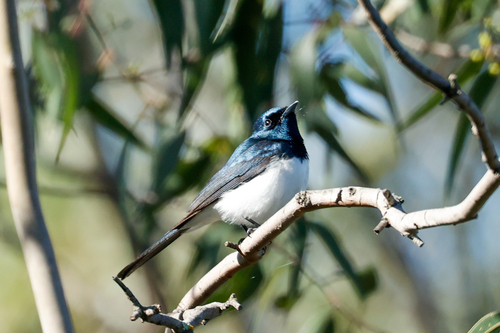
Satin Flycatcher (Myiagra cyanoleuca) Satin Flycatcher
Shining Flycatcher (Myiagra alecto) Shining Flycatcher

Media

Loading…

In short

The Satin Flycatcher and Shining Flycatcher are both members of the Monarchidae family, making them structurally similar. The most reliable field mark is the habitat preference: Satin Flycatchers are typically found in more open forests, while Shining Flycatchers prefer dense mangroves and wet forests. Plumage differences are subtle, with the male Satin Flycatcher having a more uniform glossy blue-black appearance compared to the Shining Flycatcher's more iridescent sheen.

Identification tips

  1. Habitat: Look for Satin Flycatchers in open forests, while Shining Flycatchers are in dense mangroves. 2. Plumage: Note the uniform glossy blue-black of male Satin Flycatchers versus the iridescent sheen of male Shining Flycatchers. 3. Vocalization: Listen for the simpler song of the Satin Flycatcher compared to the more varied call of the Shining Flycatcher. 4. Female Plumage: Female Satin Flycatchers have a rufous throat and breast, unlike the more uniformly dark female Shining Flycatchers.

Size

Both species are similar in size, typical of small flycatchers, with no significant differences in overall dimensions.

Plumage

Male Satin Flycatchers have a glossy blue-black plumage that is more uniform, while male Shining Flycatchers display a more iridescent and variable sheen. Female Satin Flycatchers have a rufous throat and breast, contrasting with the darker upperparts, whereas female Shining Flycatchers are more uniformly dark with less contrast.

Behaviour

Both species exhibit typical flycatcher behavior, such as sallying from perches to catch insects. However, Shining Flycatchers are more often seen in dense, wet habitats, which influences their foraging behavior.

Habitat

Satin Flycatchers are usually found in open forests and woodlands, often near water. In contrast, Shining Flycatchers are more restricted to dense mangroves and wet forests, rarely venturing into open areas.

Voice

Both species have distinctive calls, but the Shining Flycatcher's call is more varied and complex. The Satin Flycatcher has a simpler, more repetitive song.

Submit a better description

Use the same sections as the comparison. Your text is published immediately.

The Satin Flycatcher and Shining Flycatcher are both members of the Monarchidae family, making them structurally similar. The most reliable field mark is the habitat preference: Satin Flycatchers are typically found in more open forests, while Shining Flycatchers prefer dense mangroves and wet forests. Plumage differences are subtle, with the male Satin Flycatcher having a more uniform glossy blue-black appearance compared to the Shining Flycatcher's more iridescent sheen.

  1. Habitat: Look for Satin Flycatchers in open forests, while Shining Flycatchers are in dense mangroves. 2. Plumage: Note the uniform glossy blue-black of male Satin Flycatchers versus the iridescent sheen of male Shining Flycatchers. 3. Vocalization: Listen for the simpler song of the Satin Flycatcher compared to the more varied call of the Shining Flycatcher. 4. Female Plumage: Female Satin Flycatchers have a rufous throat and breast, unlike the more uniformly dark female Shining Flycatchers.

Both species are similar in size, typical of small flycatchers, with no significant differences in overall dimensions.

Male Satin Flycatchers have a glossy blue-black plumage that is more uniform, while male Shining Flycatchers display a more iridescent and variable sheen. Female Satin Flycatchers have a rufous throat and breast, contrasting with the darker upperparts, whereas female Shining Flycatchers are more uniformly dark with less contrast.

Both species exhibit typical flycatcher behavior, such as sallying from perches to catch insects. However, Shining Flycatchers are more often seen in dense, wet habitats, which influences their foraging behavior.

Satin Flycatchers are usually found in open forests and woodlands, often near water. In contrast, Shining Flycatchers are more restricted to dense mangroves and wet forests, rarely venturing into open areas.

Both species have distinctive calls, but the Shining Flycatcher's call is more varied and complex. The Satin Flycatcher has a simpler, more repetitive song.

Discard your changes?

You have unsaved edits. If you leave now, those changes will be lost.

Satin Flycatcher · Shining Flycatcher · My Tricky Birds