Birdr

Schrenck's Bittern vs Malayan Night Heron

Botaurus eurhythmus versus Gorsachius melanolophus

Play a quiz with Schrenck's Bittern and Malayan Night Heron
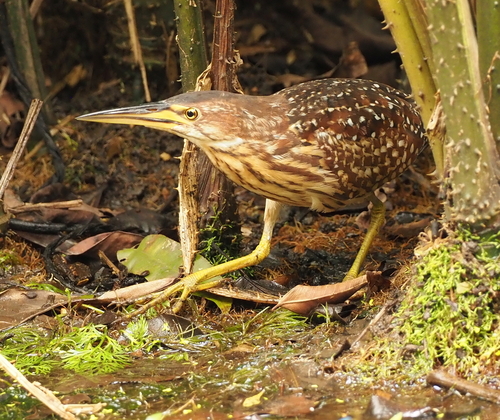
Schrenck's Bittern (Botaurus eurhythmus) Schrenck's Bittern
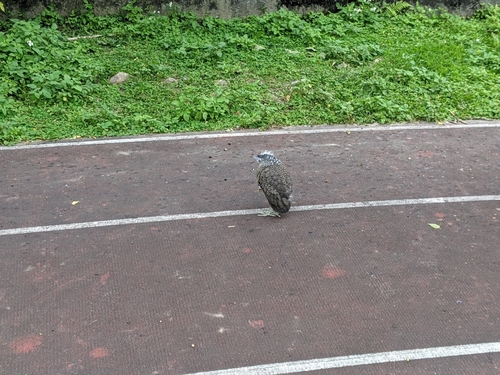
Malayan Night Heron (Gorsachius melanolophus) Malayan Night Heron

Media

Loading…

In short

Schrenck's Bittern and the Malayan Night Heron can be distinguished by their plumage and behavior. Schrenck's Bittern is more secretive and often found in dense reed beds, while the Malayan Night Heron is more terrestrial and can be seen foraging in open areas. Plumage differences are notable, with Schrenck's Bittern having a more uniform buff coloration compared to the more patterned and darker Malayan Night Heron.

Identification tips

  1. Plumage: Look for the buff and rufous tones of Schrenck's Bittern versus the darker, more patterned Malayan Night Heron. 2. Behavior: Note the skulking, secretive behavior of Schrenck's Bittern compared to the more visible, terrestrial habits of the Malayan Night Heron. 3. Habitat: Consider the habitat; Schrenck's Bittern is more likely in dense marshes, while the Malayan Night Heron can be found in open fields and forests.

Size

Both species are similar in size, but the Malayan Night Heron appears bulkier due to its more robust build.

Plumage

Schrenck's Bittern has a predominantly buff and rufous plumage with less contrast, while the Malayan Night Heron features a more striking pattern with a darker crown and more intricate markings on the wings and back.

Behaviour

Schrenck's Bittern is usually more secretive, often hiding in dense vegetation and showing a skulking behavior. In contrast, the Malayan Night Heron is more likely to be seen walking in open areas, especially during the day.

Habitat

Schrenck's Bittern prefers dense reed beds and marshes, while the Malayan Night Heron is often found in forested areas and open fields, sometimes near water but not exclusively.

Voice

Vocalizations are not typically used for field identification between these two species, as both are relatively quiet and their calls are not well-documented.

Submit a better description

Use the same sections as the comparison. Your text is published immediately.

Schrenck's Bittern and the Malayan Night Heron can be distinguished by their plumage and behavior. Schrenck's Bittern is more secretive and often found in dense reed beds, while the Malayan Night Heron is more terrestrial and can be seen foraging in open areas. Plumage differences are notable, with Schrenck's Bittern having a more uniform buff coloration compared to the more patterned and darker Malayan Night Heron.

  1. Plumage: Look for the buff and rufous tones of Schrenck's Bittern versus the darker, more patterned Malayan Night Heron. 2. Behavior: Note the skulking, secretive behavior of Schrenck's Bittern compared to the more visible, terrestrial habits of the Malayan Night Heron. 3. Habitat: Consider the habitat; Schrenck's Bittern is more likely in dense marshes, while the Malayan Night Heron can be found in open fields and forests.

Both species are similar in size, but the Malayan Night Heron appears bulkier due to its more robust build.

Schrenck's Bittern has a predominantly buff and rufous plumage with less contrast, while the Malayan Night Heron features a more striking pattern with a darker crown and more intricate markings on the wings and back.

Schrenck's Bittern is usually more secretive, often hiding in dense vegetation and showing a skulking behavior. In contrast, the Malayan Night Heron is more likely to be seen walking in open areas, especially during the day.

Schrenck's Bittern prefers dense reed beds and marshes, while the Malayan Night Heron is often found in forested areas and open fields, sometimes near water but not exclusively.

Vocalizations are not typically used for field identification between these two species, as both are relatively quiet and their calls are not well-documented.

Discard your changes?

You have unsaved edits. If you leave now, those changes will be lost.

Schrenck's Bittern · Malayan Night Heron · My Tricky Birds