Birdr

Schrenck's Bittern vs Yellow Bittern

Botaurus eurhythmus versus Botaurus sinensis

Play a quiz with Schrenck's Bittern and Yellow Bittern
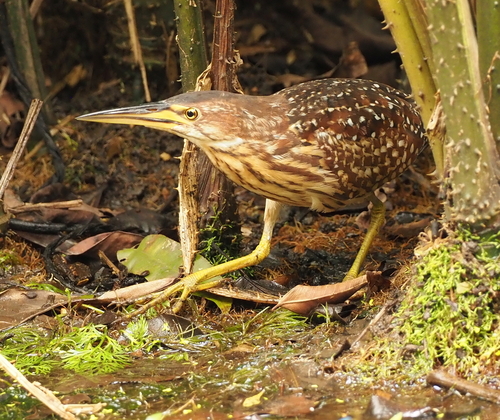
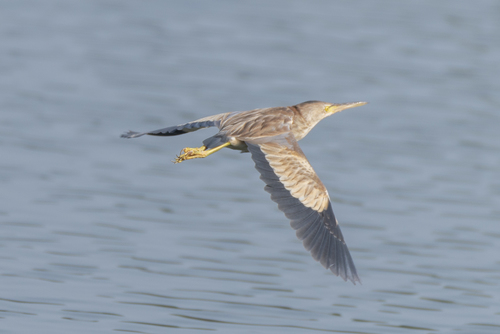
Schrenck's Bittern (Botaurus eurhythmus) Schrenck's Bittern
Yellow Bittern (Botaurus sinensis) Yellow Bittern

Media

Loading…

In short

Schrenck's Bittern and Yellow Bittern are both small herons, but Schrenck's Bittern is generally more robust with a slightly shorter neck and thicker bill. The most reliable field mark is the male Schrenck's Bittern's distinctive chestnut coloration compared to the more uniformly buff and brown Yellow Bittern.

Identification tips

  1. Look for the chestnut coloration in male Schrenck's Bitterns. 2. Note the more robust build and thicker bill of Schrenck's Bittern. 3. Observe habitat preference: Schrenck's Bitterns are more reed bed specialists. 4. In females and juveniles, focus on the darker streaking of Schrenck's Bittern.

Size

Schrenck's Bittern is slightly larger and more robust than the more slender Yellow Bittern.

Plumage

Male Schrenck's Bitterns have a distinctive chestnut color on their upperparts and wings, while Yellow Bitterns are more uniformly buff and brown. Females and juveniles of both species are more similar, but Schrenck's Bitterns tend to have darker streaking.

Behaviour

Both species exhibit similar behavior, often skulking in dense vegetation and being secretive. However, Schrenck's Bittern may appear more robust in posture.

Habitat

Both species inhabit wetlands, but Schrenck's Bittern is more often found in reed beds, while Yellow Bittern can also be seen in more open marshes and rice fields.

Voice

Vocalizations are not a reliable distinguishing feature in the field as both species are generally silent and their calls are infrequently heard.

Submit a better description

Use the same sections as the comparison. Your text is published immediately.

Schrenck's Bittern and Yellow Bittern are both small herons, but Schrenck's Bittern is generally more robust with a slightly shorter neck and thicker bill. The most reliable field mark is the male Schrenck's Bittern's distinctive chestnut coloration compared to the more uniformly buff and brown Yellow Bittern.

  1. Look for the chestnut coloration in male Schrenck's Bitterns. 2. Note the more robust build and thicker bill of Schrenck's Bittern. 3. Observe habitat preference: Schrenck's Bitterns are more reed bed specialists. 4. In females and juveniles, focus on the darker streaking of Schrenck's Bittern.

Schrenck's Bittern is slightly larger and more robust than the more slender Yellow Bittern.

Male Schrenck's Bitterns have a distinctive chestnut color on their upperparts and wings, while Yellow Bitterns are more uniformly buff and brown. Females and juveniles of both species are more similar, but Schrenck's Bitterns tend to have darker streaking.

Both species exhibit similar behavior, often skulking in dense vegetation and being secretive. However, Schrenck's Bittern may appear more robust in posture.

Both species inhabit wetlands, but Schrenck's Bittern is more often found in reed beds, while Yellow Bittern can also be seen in more open marshes and rice fields.

Vocalizations are not a reliable distinguishing feature in the field as both species are generally silent and their calls are infrequently heard.

Discard your changes?

You have unsaved edits. If you leave now, those changes will be lost.

Schrenck's Bittern · Yellow Bittern · My Tricky Birds