
Scissor-tailed Flycatcher vs Fork-tailed Flycatcher
Tyrannus forficatus versus Tyrannus savana
Play a quiz with Scissor-tailed Flycatcher and Fork-tailed Flycatcher
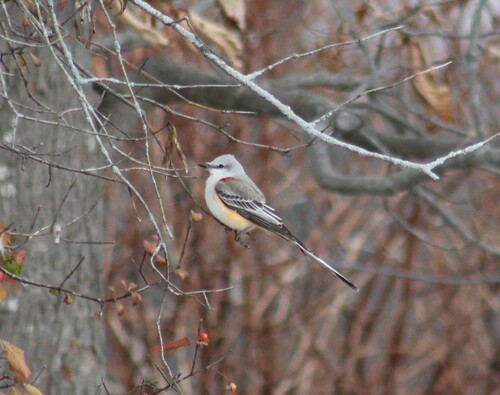
Scissor-tailed Flycatcher
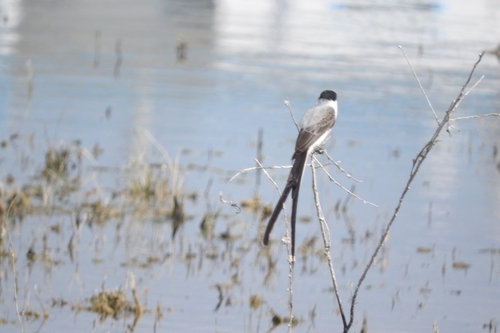
Fork-tailed Flycatcher
In short
The Scissor-tailed Flycatcher and Fork-tailed Flycatcher both have dramatically elongated tails, but the Scissor-tailed Flycatcher is more robust with a pale gray body and salmon-pink flanks. The Fork-tailed Flycatcher is slimmer with a black cap and white underparts. Tail length and structure are key identifiers.
Identification tips
- Tail Structure: Scissor-tailed Flycatcher has a longer and more deeply forked tail compared to the Fork-tailed Flycatcher.
- Plumage: Look for the salmon-pink flanks in Scissor-tailed Flycatcher versus the black cap of the Fork-tailed Flycatcher.
- Size and Build: Scissor-tailed is more robust, while Fork-tailed is slimmer.
- Geographic Range: Consider the location; Scissor-tailed is primarily in North America, while Fork-tailed is more widespread in Central and South America.
Size
Scissor-tailed Flycatcher is generally larger and more robust than the slimmer Fork-tailed Flycatcher.
Plumage
Scissor-tailed Flycatcher has a pale gray body with salmon-pink flanks and underwings, while the Fork-tailed Flycatcher has a distinctive black cap and white underparts.
Behaviour
Both species exhibit similar flycatching behavior, often seen sallying from perches to catch insects.
Habitat
Scissor-tailed Flycatcher prefers open grasslands with scattered trees in North America, while Fork-tailed Flycatcher is more variable, found in open areas across Central and South America.
Voice
Vocalizations are not the most reliable differentiator, as both species have similar calls typical of kingbirds.
Scissor-tailed Flycatcher · Fork-tailed Flycatcher · My Tricky Birds