Birdr

Sedge Warbler vs Common Reed Warbler

Acrocephalus schoenobaenus versus Acrocephalus scirpaceus

Play a quiz with Sedge Warbler and Common Reed Warbler
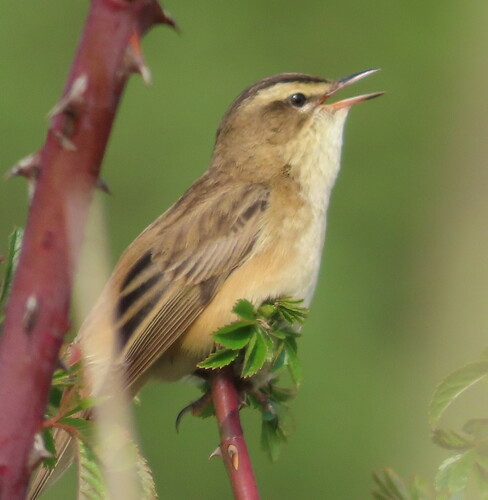
Sedge Warbler (Acrocephalus schoenobaenus) Sedge Warbler
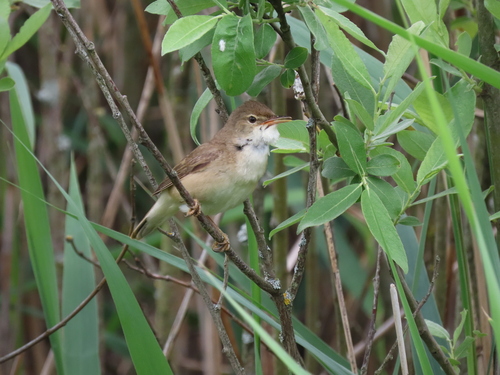
Common Reed Warbler (Acrocephalus scirpaceus) Common Reed Warbler

Media

Loading…

In short

The Sedge Warbler and Common Reed Warbler are both small, brownish warblers often found in similar wetland habitats, but they can be distinguished by their plumage and behavior. The Sedge Warbler has a distinctive bold white supercilium and more streaked upperparts, while the Common Reed Warbler is more uniformly brown with a less pronounced supercilium.

Identification tips

1. Supercilium: Look for the bold white supercilium of the Sedge Warbler. 2. Plumage: Note the streaked back of the Sedge Warbler versus the plain brown of the Common Reed Warbler. 3. Behavior: Observe their activity; Sedge Warblers are more active and conspicuous. 4. Song: Listen for the complex song of the Sedge Warbler compared to the rhythmic song of the Common Reed Warbler.

Size

Both species are similar in size, with the Common Reed Warbler being slightly more slender.

Plumage

The Sedge Warbler features a bold white supercilium and heavily streaked back, whereas the Common Reed Warbler has a more uniform brown plumage with a less distinct supercilium.

Behaviour

Sedge Warblers are more active and often seen flitting through reeds, while Common Reed Warblers tend to move more deliberately and are often less conspicuous.

Habitat

Both species inhabit reed beds and wetlands, but the Common Reed Warbler can also be found in drier shrubby areas, especially in Africa.

Voice

The Sedge Warbler has a more varied and complex song with mimicry, while the Common Reed Warbler's song is a simpler, rhythmic series of churring notes.

Submit a better description

Use the same sections as the comparison. Your text is published immediately.

The Sedge Warbler and Common Reed Warbler are both small, brownish warblers often found in similar wetland habitats, but they can be distinguished by their plumage and behavior. The Sedge Warbler has a distinctive bold white supercilium and more streaked upperparts, while the Common Reed Warbler is more uniformly brown with a less pronounced supercilium.

1. Supercilium: Look for the bold white supercilium of the Sedge Warbler. 2. Plumage: Note the streaked back of the Sedge Warbler versus the plain brown of the Common Reed Warbler. 3. Behavior: Observe their activity; Sedge Warblers are more active and conspicuous. 4. Song: Listen for the complex song of the Sedge Warbler compared to the rhythmic song of the Common Reed Warbler.

Both species are similar in size, with the Common Reed Warbler being slightly more slender.

The Sedge Warbler features a bold white supercilium and heavily streaked back, whereas the Common Reed Warbler has a more uniform brown plumage with a less distinct supercilium.

Sedge Warblers are more active and often seen flitting through reeds, while Common Reed Warblers tend to move more deliberately and are often less conspicuous.

Both species inhabit reed beds and wetlands, but the Common Reed Warbler can also be found in drier shrubby areas, especially in Africa.

The Sedge Warbler has a more varied and complex song with mimicry, while the Common Reed Warbler's song is a simpler, rhythmic series of churring notes.

Discard your changes?

You have unsaved edits. If you leave now, those changes will be lost.

Sedge Warbler · Common Reed Warbler · My Tricky Birds